
How to Find Cheap Housing in Korea: Low Deposit & Budget Rent Strategies for Foreigners
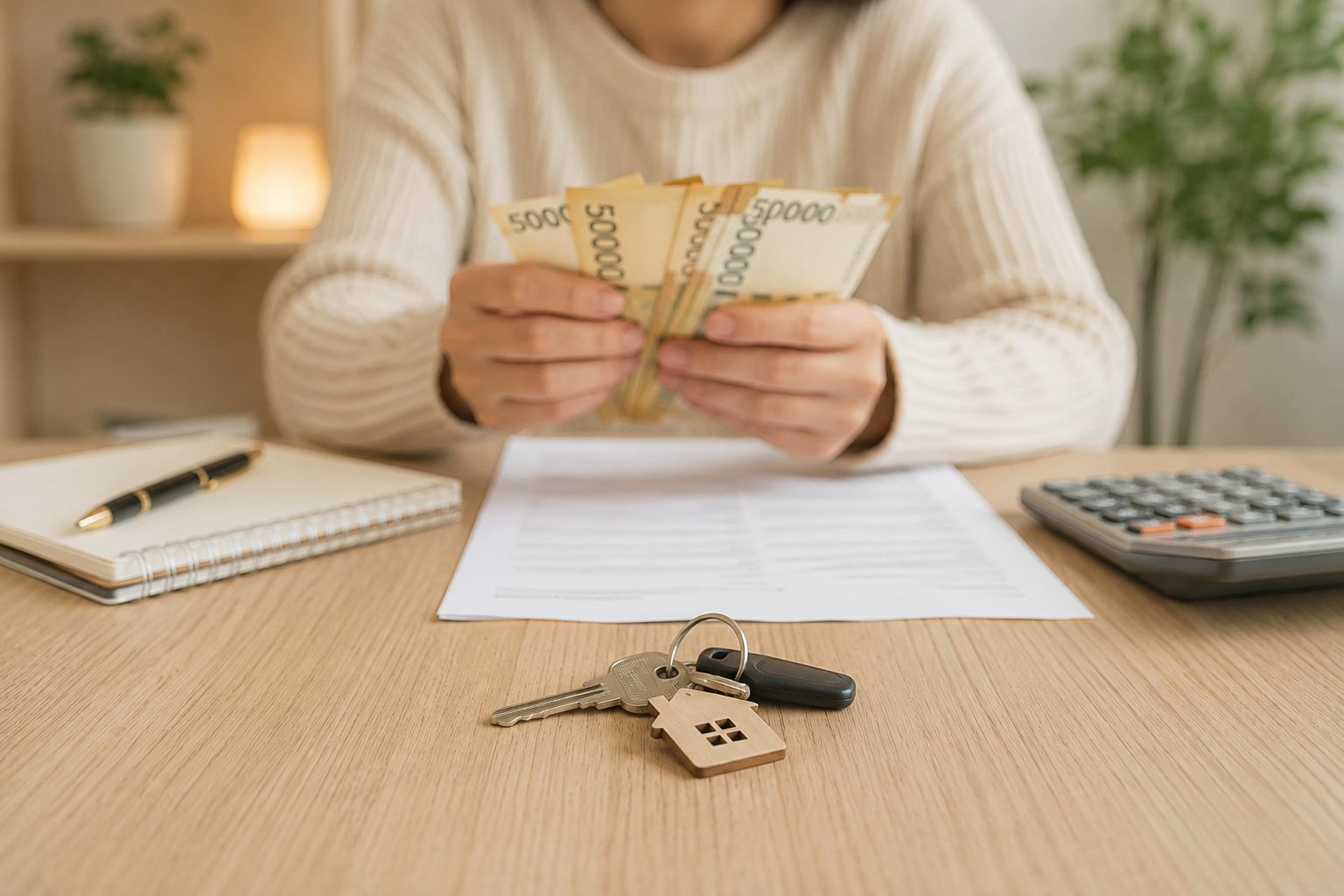
Most advice about cheap housing in Korea tells you where to look — which neighbourhoods are affordable. That's useful, and there's a guide for it. But location is only one lever, and often not the one that saves you the most.
This guide is about the other levers: how to bring down the deposit that's blocking you, which housing types cost least, when to search, and the hidden costs that quietly inflate what you actually pay. These work in any neighbourhood.
First, Understand What's Actually Expensive
The thing that stops most foreign renters isn't the monthly rent — it's the deposit. A standard one-room near a Seoul university commonly asks ₩5,000,000–₩10,000,000 up front. That's the barrier that makes people think they can't afford to live somewhere, when the monthly rent alone would have been manageable.
So the single most effective way to rent affordably in Korea is usually not to find cheaper rent — it's to reduce or avoid the deposit. Almost everything below comes back to that.
Lever 1: Cut the Deposit
Choose a housing type with a low deposit
The deposit varies enormously by housing type, far more than the monthly rent does:
| Type | Typical deposit | Monthly rent |
|---|---|---|
| Goshiwon (고시원) | ₩0 – minimal | ₩300,000 – ₩500,000 |
| Share house (쉐어하우스) | ₩500,000 – ₩2 mil | ₩450,000 – ₩700,000 |
| One-room (원룸) | ₩5 mil – ₩10 mil | ₩500,000 – ₩700,000 |
For someone arriving without much capital, a goshiwon or share house isn't just cheaper monthly — it removes the ₩5–10 million barrier entirely. That's often the difference between "I can move now" and "I can't."
→ Goshiwon in Korea: A Complete Guide for Foreign Renters → Share House in Korea: How to Find One as a Foreigner
Or trade the deposit against rent
If you do want a standard one-room but the deposit is the obstacle, Korea's rental system lets you shift the balance. A lower deposit with higher monthly rent is often negotiable — landlords prefer the reverse, but many will accept a modest rent premium for a smaller deposit.
→ Deposit vs. Monthly Rent in Korea: How to Negotiate Wolse and Protect Your Money
Lever 2: Choose the Right Housing Type
Beyond the deposit, housing types differ in total cost and in what's included.
Goshiwon — cheapest overall for a short or solo stay. Utilities and often rice/ramen included. Tiny, shared facilities.
Share house — furnished, utilities usually included up to a cap, no furniture to buy. The bundled costs matter: no deposit-sized outlay, no setup costs.
Banjiha (semi-basement) — cheaper than an equivalent above-ground room, though the gap varies by area. Check flooding and damp carefully; the saving is real but so are the trade-offs.
Oktapbang (rooftop) — often cheaper, with better light and air than a banjiha. Watch insulation (heating/cooling bills) and confirm you can register your address.
→ Banjiha and Oktapbang: What to Check Before You Sign
The furnished factor. An empty one-room means buying a bed, fridge, and washing machine — easily several hundred thousand won on top. A furnished share house or goshiwon avoids that entirely. For a shorter stay, "furnished but pricier monthly" often beats "cheap but empty."
Lever 3: Time It Right
When you search changes what you pay. Korea's rental market has busy and quiet seasons tied to the academic calendar.
- Peak (late February, late August): most rooms, most competition, least negotiating room.
- Off-peak (June–July, November–December): fewer rooms, but far fewer people looking — and more negotiating power.
If your timing is flexible, searching in the off-season gives you leverage: a landlord with a vacant room in a slow month has more reason to deal on price or deposit.
→ The Best Time to Find a Room in Korea: How Timing Changes What You Get
Lever 4: Look Slightly Further Out
The oldest trick, and still one of the best. Rent drops sharply a few stops down the subway line from a university or a hot neighbourhood.
The calculation to run: does the rent saving outweigh the added transport cost and time? Often it does — a room two or three stops out can be ₩100,000–₩150,000/month cheaper while adding fifteen minutes to your commute. Over a year that's a meaningful sum for a modest daily trade.
Look at where the express and multiple lines run, so "further out" doesn't mean "badly connected."
→ Cheapest Areas to Rent in Seoul → Daejeon Student Housing Guide: Rent, Dorms & Areas near KAIST, CNU & Woosong
Lever 5: Compare the Real Total, Not the Sticker Rent
The advertised rent isn't the whole cost, and the cheapest-looking listing often isn't the cheapest to actually live in. You can't avoid these costs — but knowing them lets you compare listings honestly and spot which "cheap" room is genuinely cheap.
- Maintenance fee (관리비). Added to rent monthly, ₩20,000–₩100,000+, and what it covers varies wildly — sometimes water and internet, sometimes almost nothing. Two rooms at the same advertised rent can differ by ₩80,000/month once the maintenance fee is in. Always compare rent + 관리비 together, never rent alone. A room advertised ₩30,000 cheaper can cost more once the fees are counted.
- What's bundled vs separate. In an unfurnished one-room, electricity, gas, water, and internet are usually on you, separately. In a share house or goshiwon, many of these are included in one figure. So the honest comparison isn't rent vs rent — it's total monthly outlay vs total monthly outlay.
- One-time costs, spread over your stay. The agent fee (중개보수) and setup costs — furniture and appliances for an empty room, internet installation — are real and front-loaded. They're unavoidable, but they land differently depending on how long you stay: a ₩600,000 furniture outlay is ₩50,000/month over one year, or ₩25,000 over two. For a short stay, a furnished room that skips these can beat a cheaper empty one.
→ How Much Does It Actually Cost to Start Renting in Korea? First-Month Budget Guide → How to Pay Electricity, Gas, and Water Bills in Korea: A Guide for Foreign Renters
💡 The real comparison between two options: total monthly cost (rent + 관리비 + utilities) plus one-time costs (agent fee + setup) divided by the months you'll stay. Run it and the genuinely cheaper option is often not the one with the lowest advertised rent — a furnished share house can beat an empty one-room once everything's counted.
Lever 6: Protect the Saving (Don't Trade Cheap for Risky)
One caution, because the cheapest options sometimes carry the most risk.
Cutting the deposit is smart. But the features that make housing cheap — semi-basement floors, unpermitted rooftop rooms, older buildings, heavily-mortgaged properties — can also be where deposit protection gets weaker. A cheap room where you can't register your address, or where the building's debt sits ahead of your deposit, isn't a saving; it's an exposure.
So as you cut costs, keep two non-negotiables:
- Confirm you can register your address (체류지변경신고) at the property — this protects both your deposit and your ARC.
- Check the property register before committing a deposit, especially a large one.
→ How to Read a Korean Property Register (등기부등본)
→ How to Register Your Address in Korea After Moving In: A Guide for Foreign Renters
Putting It Together
The cheapest realistic setup for most new arrivals isn't a bargain one-room — it's a share house or goshiwon for the first stretch: no deposit barrier, furnished, utilities included, and a base from which to search for something longer-term in person, in the off-season, slightly further out, once you have an ARC and some Korean rental history.
That staged approach beats hunting for a cheap standard lease from abroad, and it sidesteps the deposit barrier that stops most people before they start.
The summary levers:
- Cut the deposit — low-deposit types, or trade deposit for rent
- Pick the right type — furnished and utilities-included often win on total cost
- Time it — off-season for negotiating power
- Go a few stops out — big rent drops for small commute gains
- Compare real totals — rent + 관리비 + utilities + one-time costs, not sticker rent
- Don't trade cheap for unprotected — keep address registration and the register check
Finding genuinely affordable housing in Korea is less about spotting a bargain and more about knowing which levers to pull — and doing it without giving up the protections that keep a cheap room from becoming an expensive mistake. CheckmateKorea helps foreign renters find affordable places that are still safe to sign, with support throughout the whole process.