
The Best Time to Find a Room in Korea: How Timing Changes What You Get
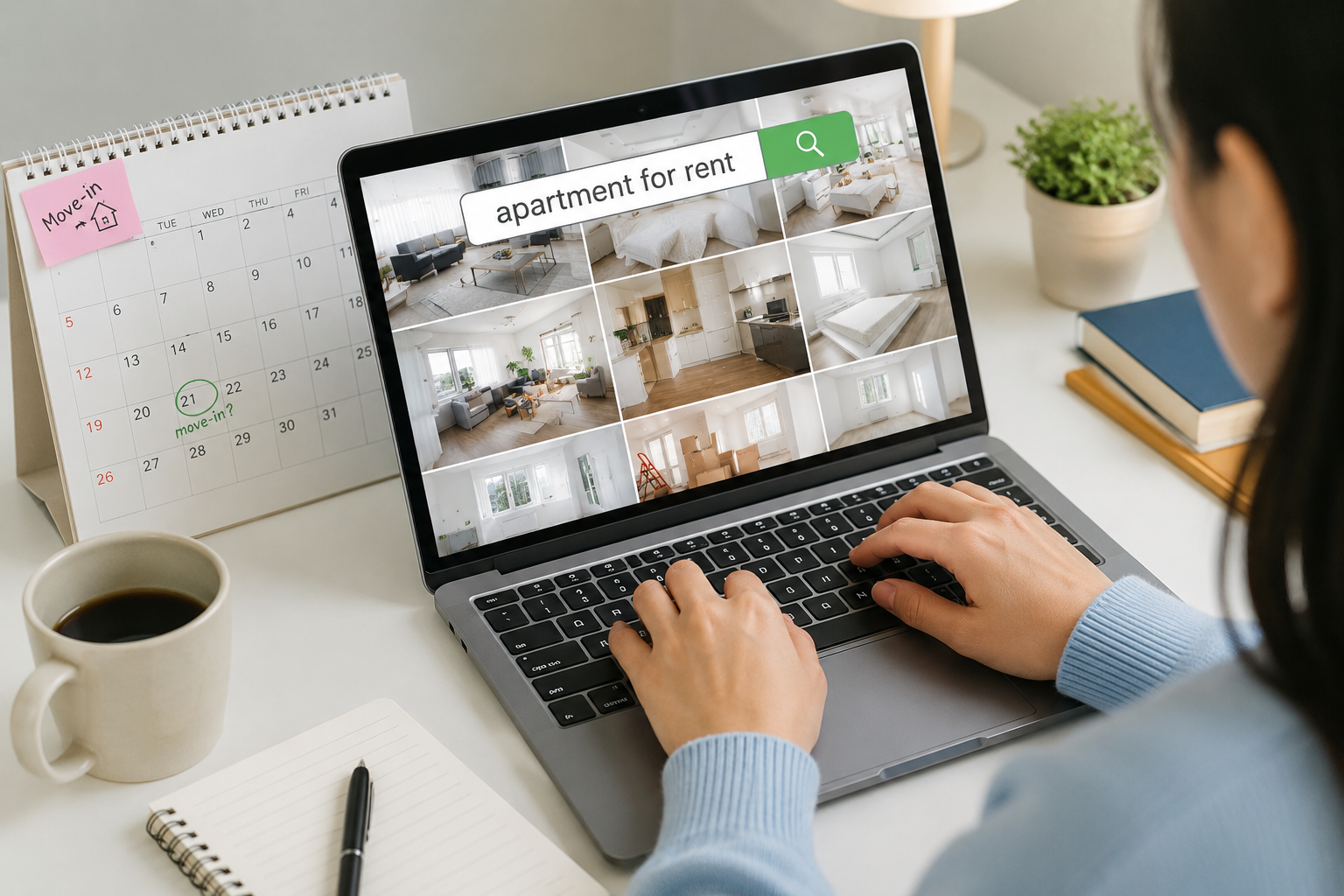
Most people search for housing whenever they happen to need it. But in Korea, when you look genuinely changes both what's available and what you'll pay — and understanding the rhythm can mean more choice, a better price, or more room to negotiate.
This guide is about timing: when supply is high, when demand is high, and how to use the calendar to your advantage rather than fighting it.
The Two Forces at Work
Every rental market runs on supply and demand, and in Korea both move on a fairly predictable calendar.
Supply — how many rooms are available — peaks when existing tenants move out. In Korea's university-heavy rental market, that's tied closely to the academic calendar and to traditional moving periods.
Demand — how many people are looking — peaks at the same moments, because everyone's leases turn over on similar schedules.
The art is finding the windows where these don't perfectly overlap: where supply is high but you're not competing with everyone else at once.
The Peak Seasons: February and August
Korea has two big turnover periods, both tied to the academic year: late February (before the March semester) and late August (before the September semester).
What happens in these windows:
- Supply is at its highest. Graduating students leave, people relocate for new terms, and a wave of rooms hits the market.
- Demand is also at its highest. Everyone else is looking at the same time — incoming students, returning students, people who timed their move to the semester.
- Good rooms move fast. The best-value units near universities can be gone within days.
- Prices hold firm. With plenty of demand, landlords have little reason to negotiate.
What this means for you: if you must move for a semester start, you'll have the most options — but you have to move quickly and decisively, and you won't have much negotiating leverage. Start early, know your budget, and be ready to commit when you find something good.
💡 If your move is tied to a semester, you don't really get to choose your timing — you're in the peak whether you like it or not. The response is to prepare thoroughly and act fast, not to wait for a better window that your schedule doesn't allow.
The Quiet Seasons: When You Have the Advantage
The off-peak periods — roughly early winter (November–December) and early summer (June–July) — flip the dynamics.
What happens:
- Fewer rooms available. Supply is lower because fewer leases turn over.
- But far fewer people looking. Demand drops more than supply does.
- More negotiating power. A landlord with an empty room in a slow month has more reason to deal — on rent, on the deposit-to-rent balance, sometimes on the move-in date.
- More time to decide. Without a crowd competing for the same room, you can view carefully and think it over.
What this means for you: if your timing is flexible — you're not locked to a semester start — searching in the off-season can get you a better deal and a less stressful process. You'll have fewer options, but more leverage on each one.
→ Deposit vs. Monthly Rent in Korea: How to Negotiate Wolse and Protect Your Money
The Trade-Off, Summarised
| Peak (Feb / Aug) | Off-peak (Jun–Jul / Nov–Dec) | |
|---|---|---|
| Rooms available | Most | Fewer |
| People competing | Most | Fewest |
| Negotiating power | Low | Higher |
| Speed needed | High — decide fast | Low — take your time |
| Best for | Those tied to a semester | Those with flexible timing |
Neither is simply "better." Peak season gives you selection at the cost of competition and price. Off-season gives you leverage and calm at the cost of selection. Which suits you depends entirely on whether your timing is flexible.
If You Can Choose Your Timing
Some people genuinely can pick when to move — you're arriving for work with some flexibility, or you're already in Korea and deciding when to relocate. If that's you:
For the best price and least stress: aim for the off-season. A landlord with a vacant room in December is more motivated than one with ten applicants in February.
For the most selection: the shoulder period just before peak — early February or early August — can be a sweet spot. Supply is ramping up as rooms come onto the market, but the full rush of competing tenants hasn't quite arrived. You get rising supply before peak demand.
Avoid the absolute peak (the last week or two before a semester starts) if you have any choice. That's when competition is fiercest and prices hold hardest.
If You Can't Choose (Most People)
If your move is tied to a semester, a job start date, or a visa timeline, you're moving when you're moving. The timing advice then becomes preparation advice:
- Start earlier than feels necessary. In peak season, the gap between "starting to look" and "rooms are gone" is short.
- Know your budget precisely before you search, so you can commit the moment you find something.
- Have your documents ready so you're not scrambling when a good room appears.
- Accept less negotiating room. In peak season, trying to haggle often just loses you the room to someone who won't.
The goal when you can't control timing is to remove every other source of delay, so that when the right room appears, nothing on your side slows you down.
A Note on Lease-End Timing
One forward-looking point: the timing of your move-in also sets the timing of your eventual move-out. A lease that ends in the dead of the off-season (say, a December end date) can be harder to exit smoothly than one ending in a turnover month — relevant if you might leave early or not renew.
If you have any flexibility at signing, a lease that ends near a turnover period (February or August) is easier to walk away from cleanly, because there's a new tenant ready to take the room.
If you need to leave before your lease term is up, Korean standard practice requires you to find a replacement tenant and cover the landlord's real estate agent fee (중개수수료/복비) for the new agreement.
⚠️ Important Notice Window: Under Korean housing law, if you do not plan to renew, you must notify your landlord 2 to 6 months before your contract ends. If you miss this window, the lease automatically undergoes "implied renewal" (묵시적 갱신) under the exact same terms. Once implied renewal happens, terminating the lease requires a 3-month statutory waiting period before you can reclaim your deposit.
→ Early Lease Termination in Korea: What Foreign Renters Need to Know
Timing is one of the few levers you fully control in the Korean rental market — and using it well can mean a better room, a better price, or simply a calmer search. CheckmateKorea helps foreign renters find the right place whatever the season, with support throughout the whole process. Start Your Search →
Frequently Asked Questions (FAQ)
Q: What is the best month to find cheap rent in Seoul?
A: November–December and June–July are generally the slowest months. Landlords facing vacancies during these off-peak periods are often more open to negotiating monthly rent or lowering the deposit requirement.
Q: Can I break my rental contract early if I have to leave Korea?
A: Yes, but you will usually need to find a replacement tenant and pay the landlord’s real estate brokerage fee (중개수수료). After notifying your landlord, it typically takes 1 to 3 months to finalize a mid-term exit.
- Deposit vs. Monthly Rent in Korea: How to Negotiate Wolse and Protect Your Money →
- Early Lease Termination in Korea: What Foreign Renters Need to Know →
- How Much Does It Actually Cost to Start Renting in Korea? →
- Securing a Room in Korea From Abroad: Student's Timeline →
- The Complete Guide to Renting an Apartment in Korea →