
Renting a Banjiha (Semi-Basement) or Oktapbang (Rooftop) in Korea: Costs, Risks, and Legal Protection
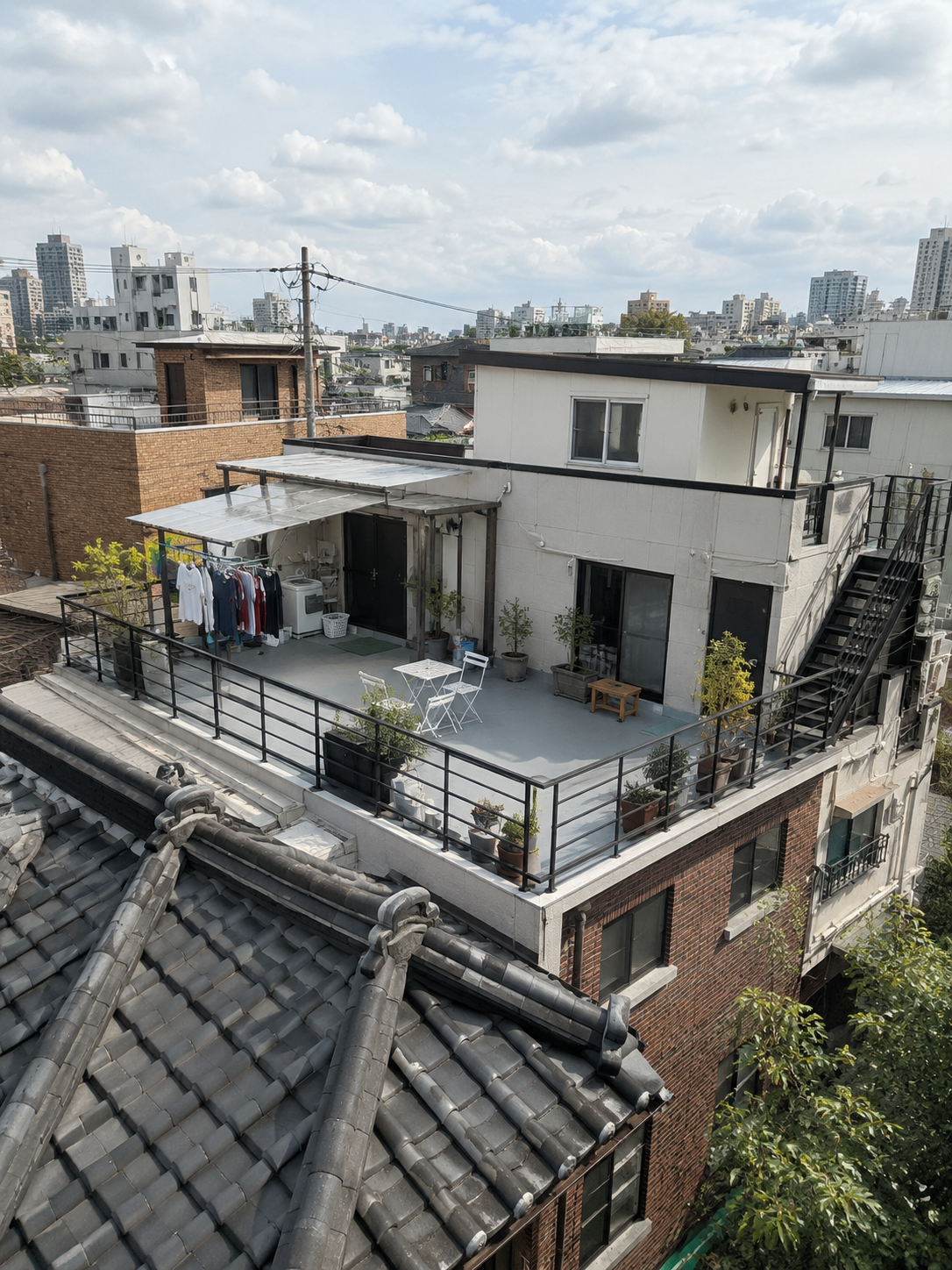
You're scrolling listings and one room is noticeably cheaper than everything around it — same neighbourhood, same size, same distance from the station. You look closer and the listing says 반지하 (banjiha) or 옥탑방 (oktapbang).
If you've never lived in Korea, those words mean nothing. They're two of the common housing types in Seoul: the semi-basement and the rooftop room. Plenty of people live in both, including plenty of people who could afford otherwise and chose them anyway.
Both offer more space or better light for the money than a standard one-room, and both vary a lot in quality — which means knowing what to look for is what separates a good find from a bad one. This guide covers what they are, why people choose them, and the specific things worth checking before you sign.
Why They Cost Less
Both types sit below standard above-ground rooms in price, and how much below varies a lot by neighbourhood — in expensive university districts the gap can be modest, while in more affordable areas it can change what's possible on your budget. Rather than trusting a general figure, compare the specific listing against ordinary rooms in the same neighbourhood.
What you're generally trading is convention rather than quality. Korean renters have strong preferences for above-ground floors, and that preference is priced in — which means a well-maintained banjiha or a well-insulated oktapbang can be significantly better value than its price suggests. The variation within each type is wider than the gap between them and a standard room.
That's the opportunity, and it's also why viewing matters. A good one and a bad one look similar in listing photos and are obvious in person.
💡 Worth comparing as you decide: a goshiwon (₩300,000–₩500,000/month, effectively no deposit) or a share house (small deposit, furnished, short minimum stay). Depending on the neighbourhood these land close on price, with different trade-offs around space and privacy.
Banjiha (반지하): The Semi-Basement
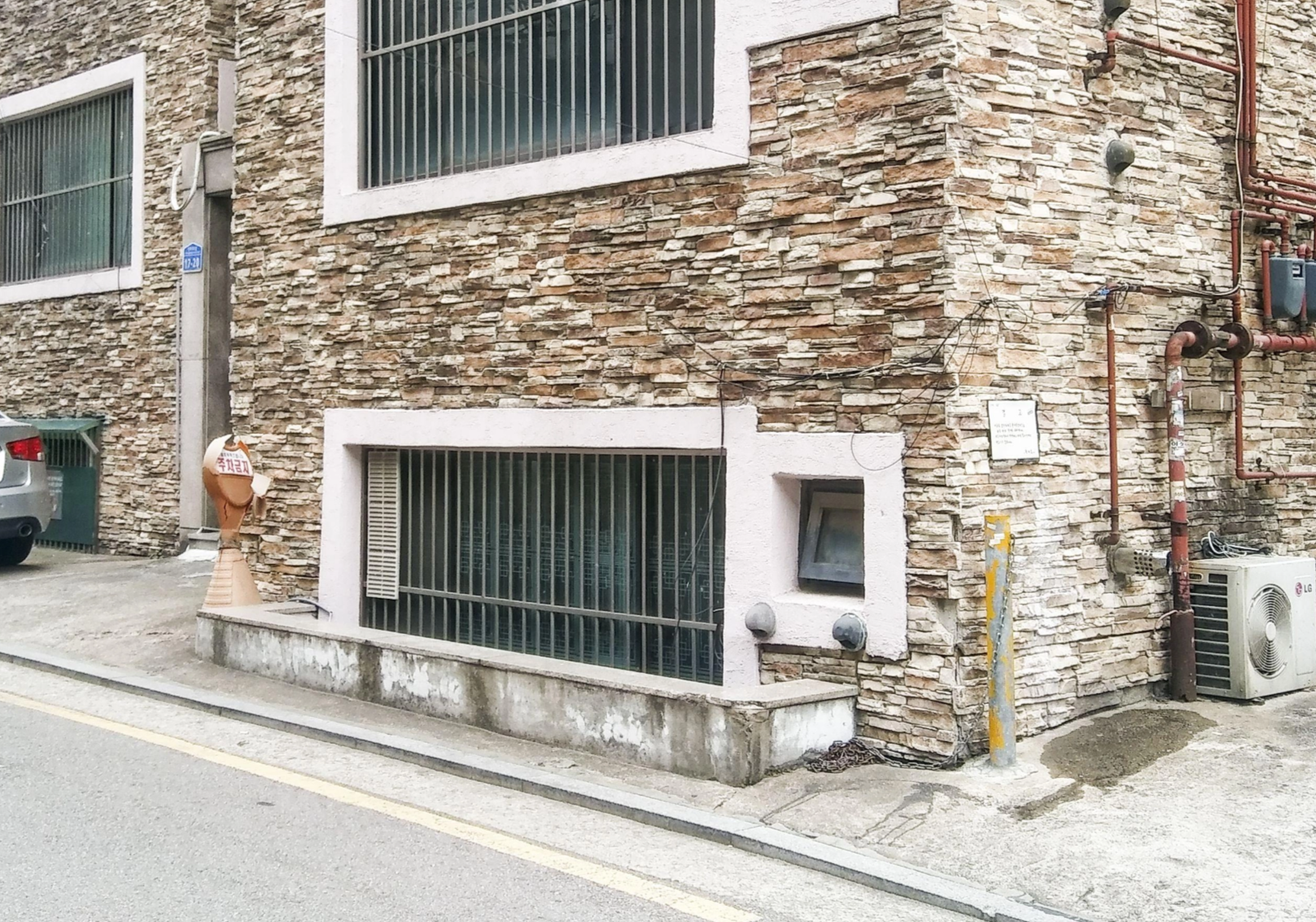
What it is
A banjiha is a partially underground floor — typically sunk so the floor sits below street level and the windows are at or slightly above the pavement. They're common in older multi-family buildings (다가구/다세대) across Seoul, especially in districts built up between the 1970s and 90s.
Why people choose them
- More space for the money. This is the main draw. In the same neighbourhood and the same budget, a banjiha is often noticeably larger than the above-ground room you'd otherwise be looking at — sometimes a proper separate bedroom instead of a single studio space.
- Cooler in summer. Below-grade rooms stay meaningfully cooler through Korea's hot, humid August. Air conditioning costs less to run, and some residents barely use it.
- Increasingly renovated. A lot of banjiha stock has been refurbished in recent years — new flooring, new windows, proper waterproofing, updated bathrooms. A renovated banjiha and a neglected one are genuinely different products, and the listing photos often reflect it.
- Ground-level access. No stairs, which matters more than people expect for groceries, deliveries, bicycles, and moving day.
What varies, and what to check
The single most important thing to understand: banjiha quality varies enormously, far more than above-ground rooms do. The difference between a good one and a bad one comes down to a handful of things you can actually check.
- Elevation and drainage. This is the big one. A banjiha on a hill or on elevated ground carries a completely different flood risk from one at the bottom of a slope. Walk the surrounding streets and look at where water would go in heavy rain. If the ground slopes away from the building, that's a good sign.
- Renovation state. Look at the windows (double glazing?), the flooring, the bathroom, and whether the walls have been properly finished. A recently renovated banjiha with good waterproofing is a different proposition from an unrenovated one.
- Dryness. Check corners, behind furniture, inside wardrobes, and the ceiling near the walls. A well-managed banjiha is dry; you can feel and smell the difference immediately.
- Light. Window height and orientation vary a lot. Some banjiha get real daylight for part of the day, others get almost none. Visit during daylight hours and see for yourself rather than judging from photos.
- Ventilation. Windows that open properly with some cross-breeze make a substantial difference to how the space feels and to damp.
- Flood history. Ask directly: "이 집 침수된 적 있나요?" (Has this place ever flooded?) An honest answer is worth a lot. If there's a 차수판 (water barrier) fitted, ask why — sometimes it's precautionary, sometimes it tells you something.
ℹ️ On flood risk, honestly: heavy-rain flooding of low-lying semi-basements is a real phenomenon in Seoul, and there were fatalities in Gwanak-gu in 2022 that led to government policy on the issue. That policy has moved slowly — most banjiha housing remains in use, and most of it is fine. The risk is concentrated in low-lying areas with poor drainage, which is precisely why elevation is the first thing to check. A banjiha on high ground is a different proposition from one at the bottom of a hill.
✅ Good sign: elevated ground, renovated interior, dry corners, windows that open, landlord answers the flood question directly.
❌ Walk away: visible mould, water marks along the base of walls, fresh paint only on the lower wall, a low-lying location with poor drainage, or evasiveness about flood history.
Oktapbang (옥탑방): The Rooftop Room
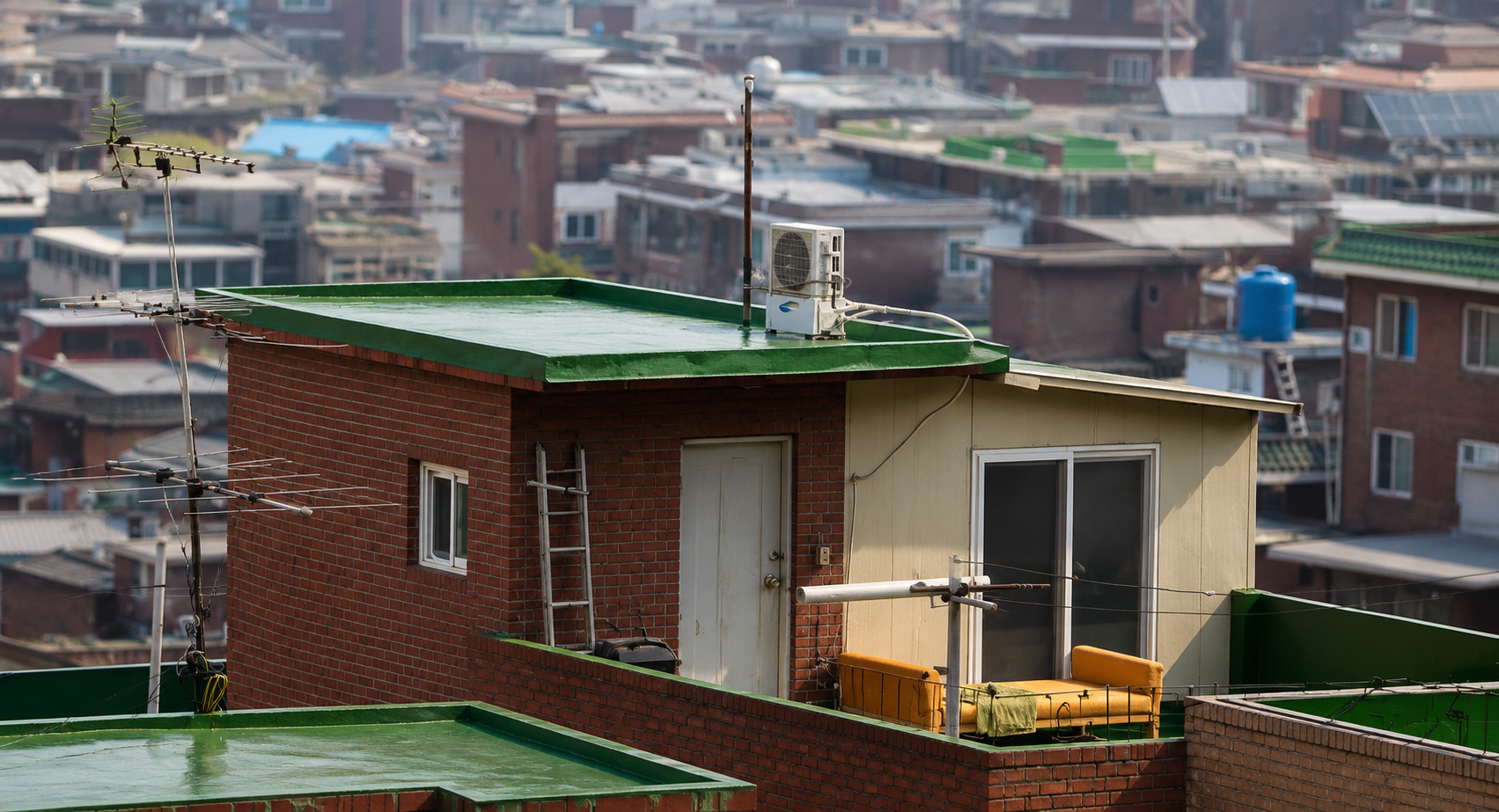
What it is
An oktapbang is a room on the roof of a building — often added by an owner after construction. You go up past the top floor and out onto the roof, where the room sits with the rooftop space around it.
Why people choose them
- Light and air. This is the real appeal. Rooftop rooms typically get better daylight and ventilation than anything else at the same price point, often on multiple sides.
- Private outdoor space. The rooftop is usually yours to use — for drying laundry, plants, a chair and a table. In a city where most budget housing has no outdoor space at all, this is a genuine luxury.
- Nobody above you. No upstairs neighbours, no footsteps overhead. In Korean multi-family buildings, floor noise (층간소음) is one of the most common complaints, and an oktapbang removes it entirely.
- Privacy and views. You're above street level, away from passing foot traffic, often with a view.
There's a reason oktapbang show up so often in Korean film and drama. The appeal is real.
What varies, and what to check
Insulation is the main variable. A rooftop room takes direct sun on the roof and often multiple walls, so summer heat and winter cold both hit harder than elsewhere in the building — but this varies enormously with construction. A well-insulated oktapbang is comfortable; a thin-panel one is not.
- What are the walls and ceiling made of? Panel construction (판넬) means poor insulation
- Is there adequate air conditioning and heating for the space?
- Ask what summer and winter utility bills actually run — the agent or previous tenant will usually tell you
- Weatherproofing. Check the ceiling and around the windows for water marks. Roof-level rooms are more exposed to rain and wind, and leaks show up in those places first.
- Stairs. No lift, several flights, every time. Fine for some people, genuinely tiring for others — think about your groceries and your suitcase.
- Rooftop access and security. Is the roof accessible to anyone in the building, or effectively private to you? Is the door secure?
The one legal check to do first
This is specific and important, and it takes five minutes.
Most oktapbang were built without permission (무허가 건축물) — added after the building's completion inspection. This is normal and expected rather than unusual.
Being unpermitted doesn't strip your rights. Korea's Housing Lease Protection Act applies to unpermitted and unregistered buildings too. If you actually live there, complete your address registration (체류지 변경 신고), and obtain a Fixed Date (확정일자) stamp on your contract, you secure both opposability (대항력) and priority repayment rights (우선변제권) to fully protect your deposit.
But it depends on the building type, and there's one case where registration isn't possible:
| 다가구주택 (single-owner multi-family) | 다세대주택 (separately-titled units) | |
|---|---|---|
| How it's registered | One title for the whole building; residents share one address | Each unit separately titled with its own dong/ho |
| Unpermitted oktapbang | Address registration works normally | Separate registration isn't possible |
| Your deposit | Protected once you register and move in | Not protected — you can't register |
In a 다가구 building everyone shares one address, so an oktapbang registers without difficulty. In a 다세대 building each unit needs its own registered number, and an unpermitted rooftop room doesn't have one.
So the check is simply: get the building register (건축물대장) for the main building, confirm whether it's 다가구 or 다세대, and ask directly — "여기 전입신고 가능한가요?" (Can I register my address here?)
If it's 다가구, or if registration is confirmed possible, this issue is settled and you can evaluate the room on its merits. Most oktapbang clear this without a problem.
⚠️ One offer to decline: if a landlord suggests registering your address at a different unit or another property, that doesn't work. When your registered address differs from where you actually live, the legal protection doesn't apply. It sounds helpful but it transfers the risk to you.
→ How to Read a Korean Property Register (등기부등본) → How to Register Your Address in Korea After Moving In: A Guide for Foreign Renters
For Foreign Renters Specifically
A few points that apply differently to you than to a Korean tenant.
- Address registration is doubly important. For foreign nationals, your 체류지변경신고 isn't only about deposit protection — it's tied to your ARC, and to almost every piece of administration that follows. A room where you cannot register your address creates problems that have nothing to do with the room itself.
⚠️ Departure Warning: When you permanently leave Korea and surrender your ARC at airport immigration, your registered address is automatically cancelled by law. You cannot maintain your registered address from abroad. Therefore, if you rent a banjiha or oktapbang, ensure you receive your full deposit back on your move-out morning before heading to the airport.
- You may not know what "normal" looks like. If this is your first apartment in Korea, you have no baseline for judging damp, insulation, or building age. View several ordinary rooms before viewing a banjiha or oktapbang, so you can tell the difference.
- Ask about it explicitly rather than assuming. Korean listings don't always flag a room as banjiha or oktapbang in the way you'd expect, and translated listings sometimes lose it entirely. If a room is unusually cheap, ask directly which floor it's on: "몇 층이에요? 반지하인가요? 옥탑방인가요?"
- Get the answers in writing. KakaoTalk is the standard record in Korea. Whatever you're told about flooding history or address registration, have it in text.
Choosing Between Them
A banjiha suits you if you want more space for the money, you don't mind limited daylight, and you appreciate a cooler room in summer. Prioritise elevated ground and a renovated interior, and the main concerns largely resolve themselves.
- An oktapbang suits you if light, air, and outdoor space matter to you, and you don't mind stairs. Check insulation carefully — it's the difference between a lovely room and an expensive-to-heat one — and confirm address registration is possible, which most clear without difficulty.
- Between the two: an oktapbang is usually the more pleasant room to live in day to day. A banjiha usually gives you more square metres. Which wins depends on whether you value space or light more.
- Worth a proper comparison: look at what the same money gets you in a standard room slightly further out, or in a goshiwon or share house. Sometimes the trade is clearly worth it; sometimes it isn't. That's specific to your neighbourhood and your budget, and it's worth ten minutes of listings to find out.
- Above all, view in person. Both types vary enormously, and the difference between a good one and a poor one is obvious in the room and invisible in the photos.
CheckmateKorea lists banjiha and oktapbang rooms alongside everything else — but if a listing has address-registration complications, that's exactly the kind of thing worth confirming before you commit rather than after. We check, and we'll tell you in English what you're actually signing.