
Share House in Korea: How to Find One as a Foreigner (2026 Guide)
If you're moving to Korea and the deposit numbers are giving you second thoughts — ₩5,000,000, ₩10,000,000, sometimes more, just to hold a room — a share house is worth understanding before you rule it out. Share houses in Korea typically ask for a fraction of the standard deposit, come furnished, and skip most of the paperwork that makes ordinary Korean leases hard for foreigners to sign.
That convenience has a cost, and it isn't only financial. This guide covers what a share house in Korea actually is, what you'll pay, how it compares to a one-room or goshiwon, and — most importantly — what legal protection you give up when you choose one.
What Is a Share House in Korea?
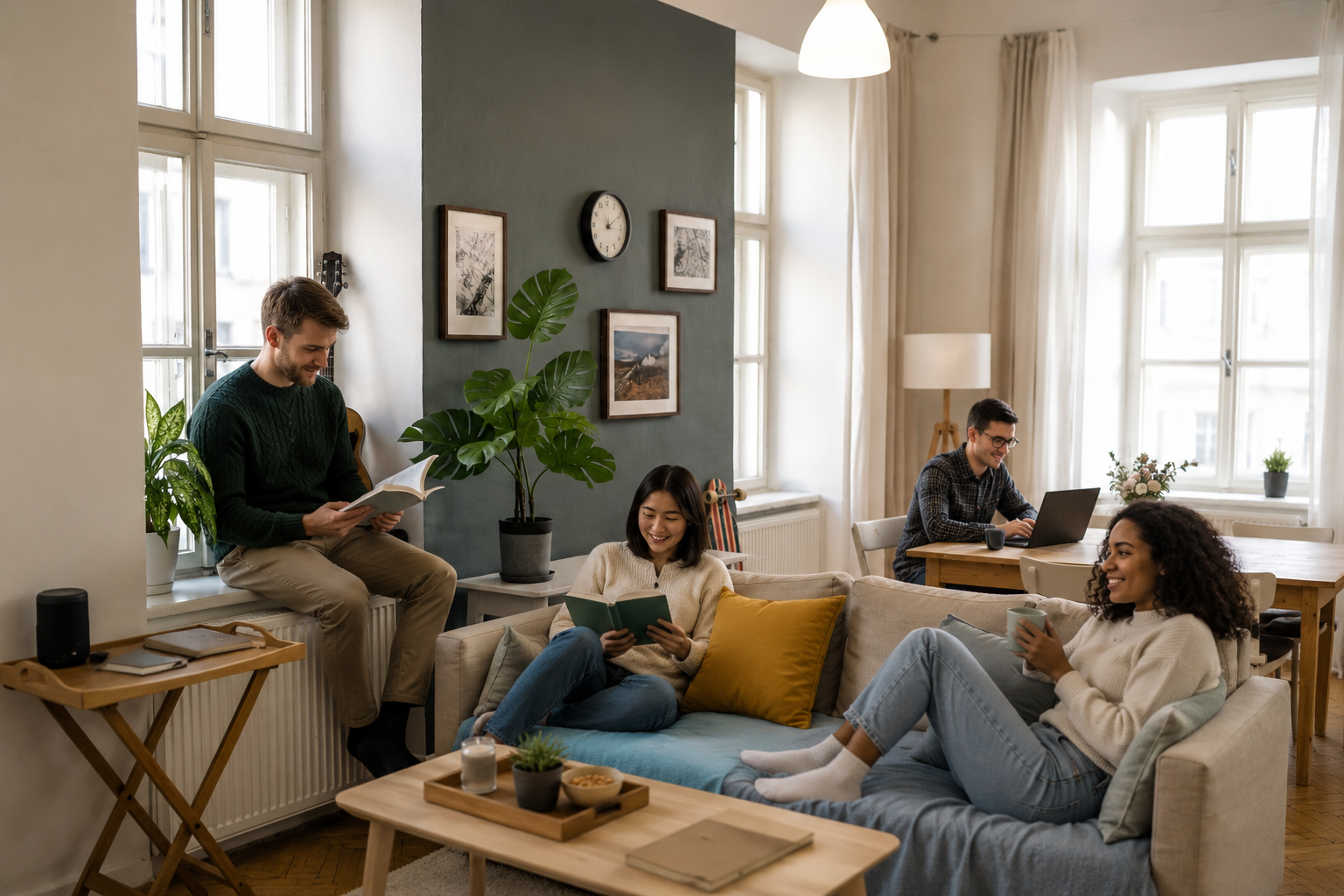
A share house (쉐어하우스) is a residence where you rent a bed or a private bedroom, and share the kitchen, living room, and usually the bathroom with other residents. The building is normally a converted villa, apartment, or multi-family house, operated by a company or an individual host rather than rented out room-by-room by a landlord.
Two configurations are common:
- Private room (1인실) — your own bedroom, shared everything else.
- Shared room (2–4인실) — bunk beds, roommates, lowest price point.
What makes a share house different from simply renting a room isn't the layout. It's that you're signing up for a managed service: furniture, appliances, wifi, and often cleaning of common areas are bundled into one monthly payment. You arrive with a suitcase and move in.
💡 Note: The term "share house" in Korea does not mean the same thing as a "flatshare" or a "roommate situation" in Western countries where tenants jointly sign a lease. In Korea, you sign an individual contract with the operator and have no legal relationship with the other residents.
Share House vs One-Room vs Goshiwon: Which Is Right for You?
Most foreign renters in Korea are choosing between these three. They fail in different directions.
| Feature | Share house | One-room (원룸) | Goshiwon (고시원) |
|---|---|---|---|
| Deposit | ₩500,000 – ₩2 mil | ₩5 mil – ₩20 mil | Little to none |
| Monthly rent | ₩400,000 – ₩850,000+ | ₩500,000 – ₩900,000+ | ₩300,000 – ₩500,000 |
| Furnished | Yes | Usually not | Yes (minimal) |
| Private bathroom | Sometimes | Yes | Usually shared |
| Kitchen | Shared, full | Private, small | Shared, basic |
| Minimum stay | 1–3 months | 12 months typical | 1 month |
| Utilities | Usually included | Billed separately | Usually included |
| Deposit protected | Often Not (High Risk) | Yes, if registered | Often not |
| Privacy | Low to medium | High | Low |
| Contract in Eng | Often available | Rare | Rare |
- Choose a share house if: your stay is 3–12 months, your budget can't absorb a large deposit, you want to arrive without buying furniture, and meeting people matters to you.
- Choose a one-room if: you're staying a year or more, you value privacy, and you can raise the deposit. It's cheaper per month over a long stay and your deposit is legally protected.
- Choose a goshiwon if: your budget is genuinely tight, your stay is short or uncertain, and you can live in a very small space.
→ Officetel vs One-Room in Korea: Which Should You Choose? → Goshiwon in Korea: A Complete Guide for Foreign Renters
Learn more about Korean Housing Info
How Much Does a Share House Cost in Korea?
Pricing varies by district, room type, and how new the building is. Broad ranges you'll encounter in Seoul as of 2026:
- Shared room (3–4인실): ₩350,000 – ₩500,000 | Deposit: ₩300,000 – ₩1 mil
- Shared room (2인실): ₩450,000 – ₩650,000 | Deposit: ₩500,000 – ₩1 mil
- Private room (1인실): ₩550,000 – ₩850,000+ | Deposit: ₩500,000 – ₩2 mil
(Note: Premium rooms in popular areas like Gangnam or Hongdae can go up to ₩950,000+).
- What's usually included: furniture, appliances, wifi, common-area cleaning, and often utilities up to a cap.
- What's usually extra: utilities above the cap, personal toiletries, food. Some operators charge a one-time cleaning or key fee of ₩50,000–₩100,000.
The deposit is the headline advantage. A one-room near a Seoul university commonly asks ₩5,000,000–₩10,000,000 up front. A share house asking ₩500,000 puts a room within reach of someone who simply does not have ten million won sitting in a Korean bank account on arrival.
⚠️ Watch the utility cap. Some contracts include utilities "up to ₩50,000/month" and bill the excess split across residents. In winter, Korean heating bills (gas) and summer air conditioning bills routinely exceed that. Ask what the actual excess bill was last season before you sign.
The Legal Risk Nobody Explains (Crucial for Foreigners)
This is the part that matters most, and it's the part share house marketing does not cover.
Your deposit in a share house is highly vulnerable and often not protected by the Housing Lease Protection Act (주택임대차보호법).
Korea's deposit protection system works like this: you register your address (전입신고 — for foreign nationals, 체류지변경신고), you get an official date stamp (확정일자) on your contract, and those two steps together give you opposing power (대항력) and priority to recover your deposit if the property goes into foreclosure.
In a share house setup, this safety net frequently breaks down due to three major risks:
- Illegal Subleasing (전대차): Most share house operators do not own the building; they lease it from the landlord and re-rent rooms to you. If they did this without the landlord’s explicit written consent, your contract is legally void against the landlord. If the operator defaults or defaults on rent, the real owner can evict you immediately, and your deposit is gone.
- Commercial/Non-Residential Buildings: Some share houses are built inside spaces registered as commercial facilities or underwent unauthorized remodeling ("room-splitting"). If the building structure violates architectural laws, the Immigration Office will reject your address registration.
- Facility Use Agreements: Even if Korean courts sometimes extend lease protections based on actual residential use, if your contract is strictly framed as a "service/facility use agreement" rather than a standard housing lease (임대차계약), securing priority legal rights over the property becomes immensely complicated.
The practical consequence: if the operator disappears or the building is foreclosed, your ₩500,000–₩2,000,000 deposit may simply vanish.
Is this a reason to avoid share houses? Not necessarily. The exposure is ₩500,000–₩2,000,000. The exposure on a one-room is ₩5,000,000–₩20,000,000. A smaller unprotected deposit can be a rational risk where a large protected one is out of reach. But you should take that risk knowingly.
→ Rental Scams in Korea: 5 Types Foreigners Fall For (And How to Avoid Them)
→ How to Register Your Address in Korea After Moving In: A Guide for Foreign Renters
The Address Registration Problem
Beyond the deposit, there's a second consequence that catches foreign residents off guard. You need a legally registered address in Korea for essential daily setups that have nothing to do with housing:
- Your ARC (외국인등록증) application and any subsequent address change (Mandatory within 15 days of moving)
- Opening a Korean bank account
- Signing a post-paid mobile phone contract
- University enrollment and visa administration
If your share house won't let you register your address—either because the landlord didn't consent or the building is unregistered—you need a backup plan before you move in, not after you've paid.
Ask this question directly before signing:
- 💬 "여기서 외국인 등록 및 체류지변경신고 할 수 있나요?" (Can I do my ARC registration and address change here?)
- 💬 "임대인(집주인) 동의서 작성이 가능한가요?" (Can you provide the landlord's consent form for subleasing?)
If the answer is vague, or "most foreigners don't bother," treat it as a massive red flag.
What to Check Before You Sign
About the Contract & Legality
- Master Lease Check: Does the operator own the building, or hold a master lease? If they sublet, ask for the Landlord’s Written Consent Form (전대동의서). Without this, your ARC address registration might be rejected by immigration.
- Contract Type: Is it an 임대차계약 (lease) or a service/facility-use agreement?
- Exit Conditions: What is the minimum stay, the penalty for leaving early, and the exact notice period required to move out?
About the House itself
- Utility Cap: What's the exact monthly utility cap, and how is the excess split?
- Bathroom Ratio: Exactly how many people share one bathroom? (Ask for the exact number, not "just a few").
- House Rules: Are there strict curfews, guest restrictions (overnight stays), or designated cleaning duties?
About Your Exit
- Deposit Return Timeline: When exactly is the deposit returned — on the move-out day, or 30 days later? Get the answer in writing via KakaoTalk or email.
Is a Share House Right for You?
Share houses solve a real problem. The deposit barrier in Korea is the single biggest obstacle for foreign renters arriving without a large amount of cash. A share house lowers it dramatically while handing you a furnished room and a contract that operators can often explain in English.
But the trade-off is real: less privacy, high legal vulnerabilities regarding your deposit, and potential hurdles with your ARC registration.
- A share house makes sense when: your stay is under a year, your budget cannot cover a standard 5M~10M KRW deposit, you want to avoid buying furniture, and you prefer an instant social network.
- A one-room makes more sense when: you're staying for over a year, you want your large deposit fully secured by Korean law, and privacy is your top priority.
Whichever way you go, asking the tough questions isn't rude — it's what a careful, smart tenant does.
🛡️ Don't Sign a Korean Contract Alone!
Not sure whether a share house contract is legally safe or if it allows ARC registration? CheckmateKorea helps foreign residents safely navigate the Korean housing market with professional contract reviews and support. Before you send your deposit, let us verify what you are actually signing.
Browse Verified Rooms on CheckmateKorea →
Get help with your contract signing →
- Goshiwon in Korea: A Complete Guide for Foreign Renters →
- Officetel vs One-Room in Korea: Which Should You Choose? →
- Korean Rental Contract Explained: 13 Clauses Every Foreign Renter Must Understand →
- Renting in Korea for 1, 3, 6 Months or Longer →
- Rental Scams in Korea: 5 Types Foreigners Fall For (And How to Avoid Them) →