
Finding a Safe Place for Women to Live Alone in Korea
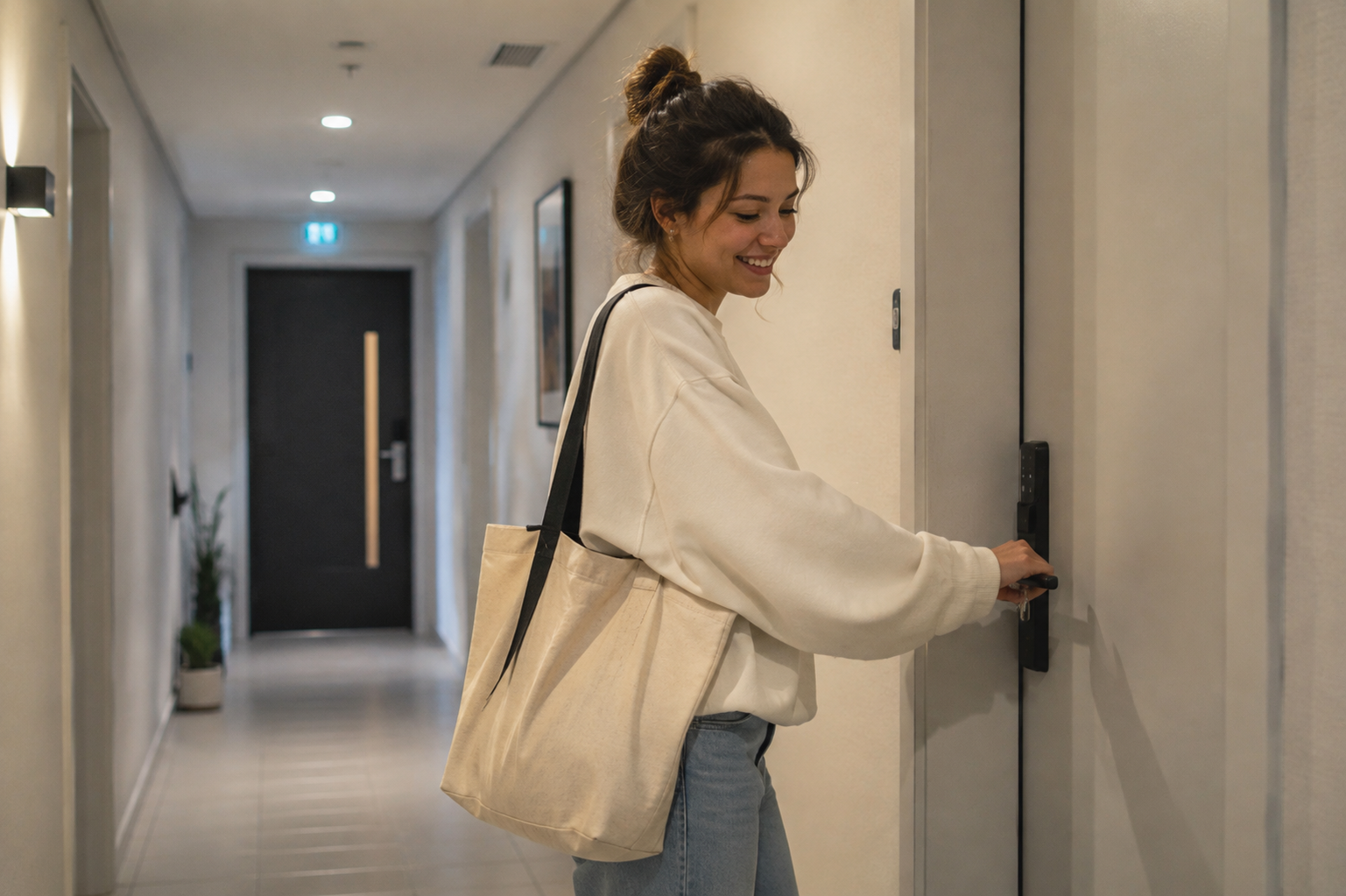
Korea is, by international standards, a relatively safe country to live in — but "relatively safe" doesn't mean every apartment is equally secure, and living alone as a woman comes with practical considerations worth thinking through before you sign a lease rather than after.
This guide is about making informed choices: what to check when viewing a room, which features genuinely matter, and habits that add a margin of safety. It's meant to be useful, not alarming.
What to Check on the Viewing
The single best time to assess safety is when you view the room. Once you've signed, most of these are fixed. A checklist to run through in person:
The entrance and door 🚪
- Door lock type. A modern digital lock (도어록) is standard and far better than a simple key lock. Check it works smoothly and ask whether the code can be changed — you want to reset it when you move in, since previous tenants may know the old one.
- Does the door seal properly? Gaps at the edge are both an insulation problem and, occasionally, a security one.
- Is there a peephole or a video doorbell? Being able to see who's outside without opening matters.
The windows 🪟
- Ground and semi-basement (반지하) windows are the most exposed — accessible from the street, visible to passers-by. Higher floors are generally more secure.
- Do windows have locks, and do they work? Especially windows reachable from a corridor, rooftop, or neighbouring structure.
- Bars on low windows are common and add security, but check they don't trap you in an emergency.
The building 🏢
- Is there a secured entrance (a door code for the building, not just the individual unit)? A building lobby that anyone can walk into is less secure than one with controlled entry.
- CCTV in the entrance and corridors. Increasingly common and genuinely useful — both as deterrent and, if something happens, as evidence.
- Lighting. Visit the building and the approach after dark if you can. A well-lit entrance and corridor matter more than they seem in daylight.
The approach 📍
- The walk from the station or bus stop. How long, how well-lit, how busy? A room that's a five-minute walk down a bright, populated street is different from one down a dark alley, even in the same neighbourhood.
- Convenience stores on the route. A 24-hour convenience store on your walk home is a small but real safety feature — somewhere lit and staffed at any hour.
Which Floor?
Floor choice involves a genuine trade-off, and it's worth being deliberate.
- Ground floor and 반지하: cheapest, but the most exposed — windows at street level, easier access. If safety is a priority, these are the ones to approach most carefully.
- Second and third floor: often considered a good balance. High enough to be less accessible from outside, low enough to exit easily in an emergency.
- Higher floors with a lift: more secure from outside access, but check the lift and corridor feel safe at night.
There's no single right answer, but as a general principle, higher is more secure than lower, and the ground and semi-basement floors are where you should weigh safety most heavily against the lower price.
→ Banjiha and Oktapbang: What to Check Before You Sign
Neighbourhood Matters
Some practical signals when assessing an area:
- Is it residential and populated, or does it empty out at night? Areas with a mix of homes, shops, and foot traffic tend to feel and be safer than isolated ones.
- University areas are often reasonable choices — populated, used to single tenants, with amenities open late.
- Check the actual street, not just the neighbourhood's reputation. Within any area, a busy main street differs from a quiet back alley.
- Women-oriented housing. Some buildings and share houses advertise as women-only (여성전용), which some people prefer.
→ Cheapest Areas to Rent in Seoul
Delivery and Privacy
A specific consideration for anyone living alone, and one Korean residents actively manage.
- Unmanned parcel lockers (무인택배함). A building with a parcel locker means deliveries don't require you to open your door to a stranger, and packages aren't left visibly outside your unit signalling that you live alone. A genuinely useful feature to look for.
- Delivery habits. Many people living alone use the building's parcel locker or a convenience store pickup point rather than door delivery, and avoid having their unit number and name visible on packages left in shared areas.
- What's on your door and mailbox. Your name and unit number visible in shared spaces is information. Some people use their building's parcel system specifically to keep it private.
💡 These are normal, widely-practised habits in Korea, not signs of an unusual level of caution. Korean residents living alone manage delivery privacy routinely.
Home Security Options
If you want an added layer, several are available:
- Digital door lock reset. The simplest step: change the entry code when you move in, and change it periodically. Free, and it closes off the most basic risk — that someone knows an old code.
- Door-front CCTV / video doorbells. Increasingly popular for people living alone. They let you see who's at the door and, if needed, provide evidence. Some are simple self-install devices.
- Home security services. Companies like SK Shieldus (캡스), KT Telecop, and S-1 (세콤) offer monitored home security — sensors, emergency response, app control. These run a monthly fee (roughly ₩60,000–₩90,000 depending on plan and contract length) and are more than most renters need, but the option exists.
- District support programmes. Some local district offices (구청) run safety-equipment support programmes for residents living alone — digital locks, door sensors, emergency bells — sometimes prioritising crime-victims or lower-income residents. Worth checking your district office's website, though eligibility and availability vary and these are typically aimed at registered residents.
Practical Habits
Widely-practised, low-effort habits that add a margin:
- Reset your door code on move-in and periodically after
- Use the building's parcel locker rather than door delivery where possible
- Keep your unit number private on visible packages and deliveries
- Note the location of the nearest 24-hour convenience store and police post (파출소) on your route home
- Emergency numbers: 112 for police, 119 for fire and medical. Both have some English support, and the 112 app allows silent reporting.
- Trust your read of a viewing. If a building or approach feels wrong to you in person, that's information worth weighing, even if you can't articulate why.
The Checklist
On move-in
Choosing a place to live alone is one decision where viewing in person really matters — the things that make a room feel secure are hard to judge from photos. CheckmateKorea helps foreign women find housing that fits, with support through the search and contract.