
What to Check When Viewing an Apartment in Korea: A Room Inspection Guide for Foreign Renters
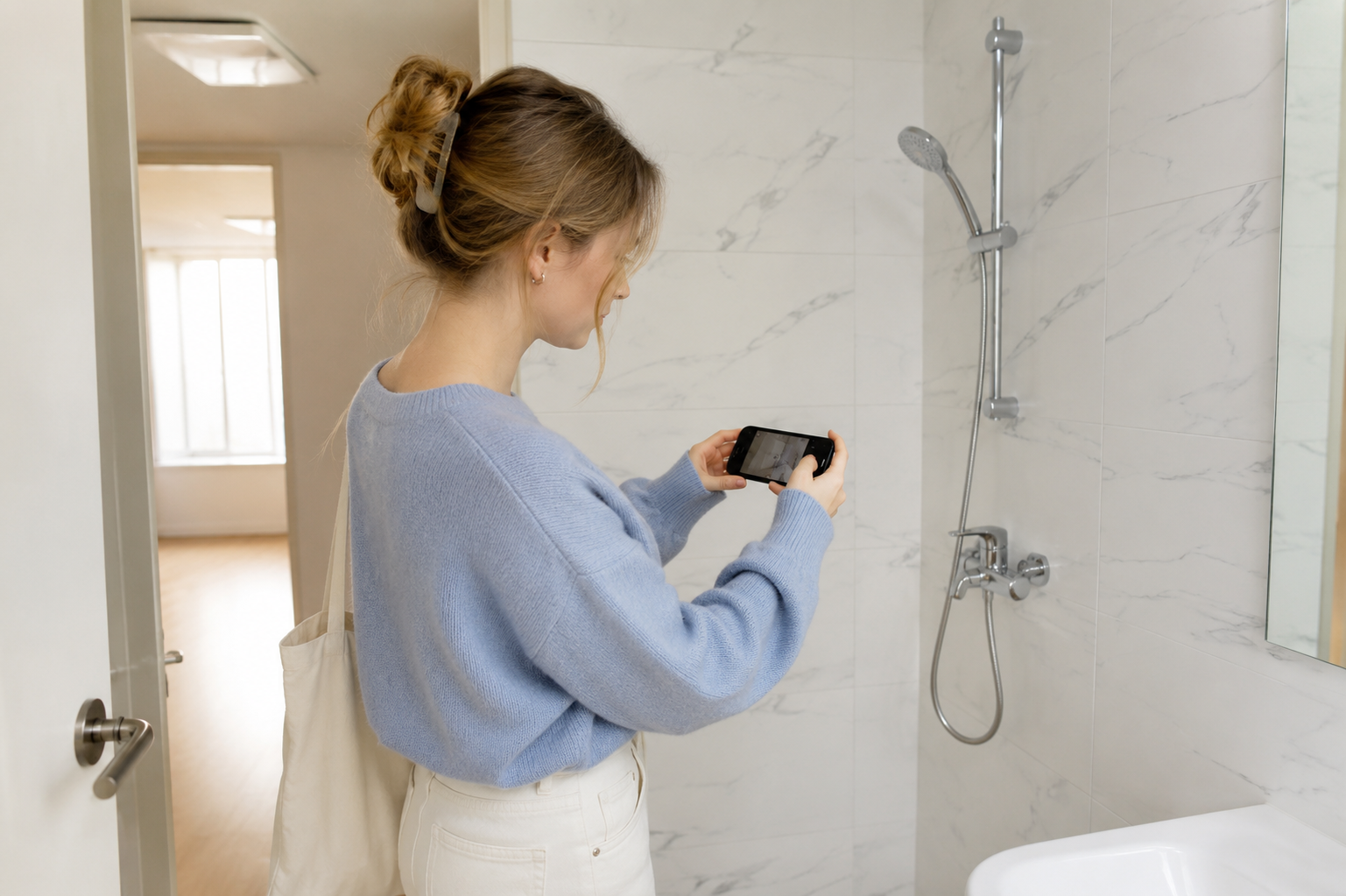
Listing photos in Korea are almost always taken with wide-angle lenses in ideal lighting. They routinely make a compact studio look spacious, hide damp corners, and don't give you any sense of noise levels or natural light. Before committing to a place, there are specific things worth checking in person — or asking someone to check on your behalf.
Before the Viewing: Check Online First
Before traveling to see a unit, do a quick check remotely:
- Maps Street View — check the building exterior and surrounding street. Does it match the listing? Is the neighborhood what you expected?
- Ask for the exact address — if the agent is vague about the address before you visit, that's a red flag
- Confirm it's still available — fake listings are common on Korean apps. Call or message to confirm before traveling
At the Viewing: What to Check
The Unit Itself
- Natural light Visit during daytime if possible. Check which direction the windows face — south-facing rooms get the most light. North-facing basement-level units can be very dark even on sunny days.
- Water pressure and hot water Turn on the shower and kitchen tap. Low water pressure is common in older buildings and annoying to live with.
- Heating system (보일러) Korea uses ondol floor heating. Ask when the boiler was last serviced. Turn it on briefly if possible — it should heat up within a few minutes.
- Signs of damp or mold Check corners, behind the bathroom door, under the sink, and around window seals. Mold in Korean apartments is more common than listings suggest, especially in semi-basement (반지하) units or north-facing rooms.
- Appliances Check the condition of whatever's included — washing machine, air conditioner, refrigerator, induction cooktop. Ask who is responsible for repairs if something breaks.
- Smell Musty smell = moisture problem. Cigarette smell = may be permanent. Trust your nose.
- Storage and closet space Korean studios often have minimal storage. Check whether there's a wardrobe, built-in shelving, or space to add one.
Noise
- Listen actively — stand still for a minute and listen. Traffic noise, neighbors, hallway sounds. Thin walls between units (common in villas) are one of the most common complaints from renters in Korea.
- Check the floor — top floor units avoid noise from above but may have roof insulation issues. Ground floor units can get street noise.
- Ask about the neighbors — agents won't always volunteer this, but it's worth asking.
The Building
- Elevator — if it's a walkup above the 4th floor, factor in daily stair use
- Security — keypad entry, CCTV in hallways, lighting at night
- Mailbox and parcel storage — for deliveries
- Laundry — in-unit washing machine hookup, or shared laundry room?
- Parking — if relevant
The Neighborhood
If time allows, walk the surrounding block:
- Convenience store, pharmacy, café nearby?
- How far to the subway station — really, not on the map?
- Visit at night if possible — check lighting and foot traffic
Document Everything Before You Move In
If you decide to take the unit, photograph every room before your belongings arrive — walls, floors, bathroom, kitchen, appliances. Share the photos with your landlord via KakaoTalk or email on move-in day. This timestamped record is your main protection against unfair damage deductions at move-out.
Note any existing damage in writing — a crack in the wall, a scratched floor, a broken appliance — and get the landlord to acknowledge it. Verbal agreements don't hold up.
If You Can't Visit In Person
If you're not confident navigating the viewing process alone — especially if you're new to Korea or don't speak Korean — CheckmateKorea's housing specialists accompany you in person, helping you ask the right questions and catch anything worth flagging before you commit.
Request an accompanied viewing →