
Rental Scams in Korea: 5 Types Foreigners Fall For (And How to Avoid Them)
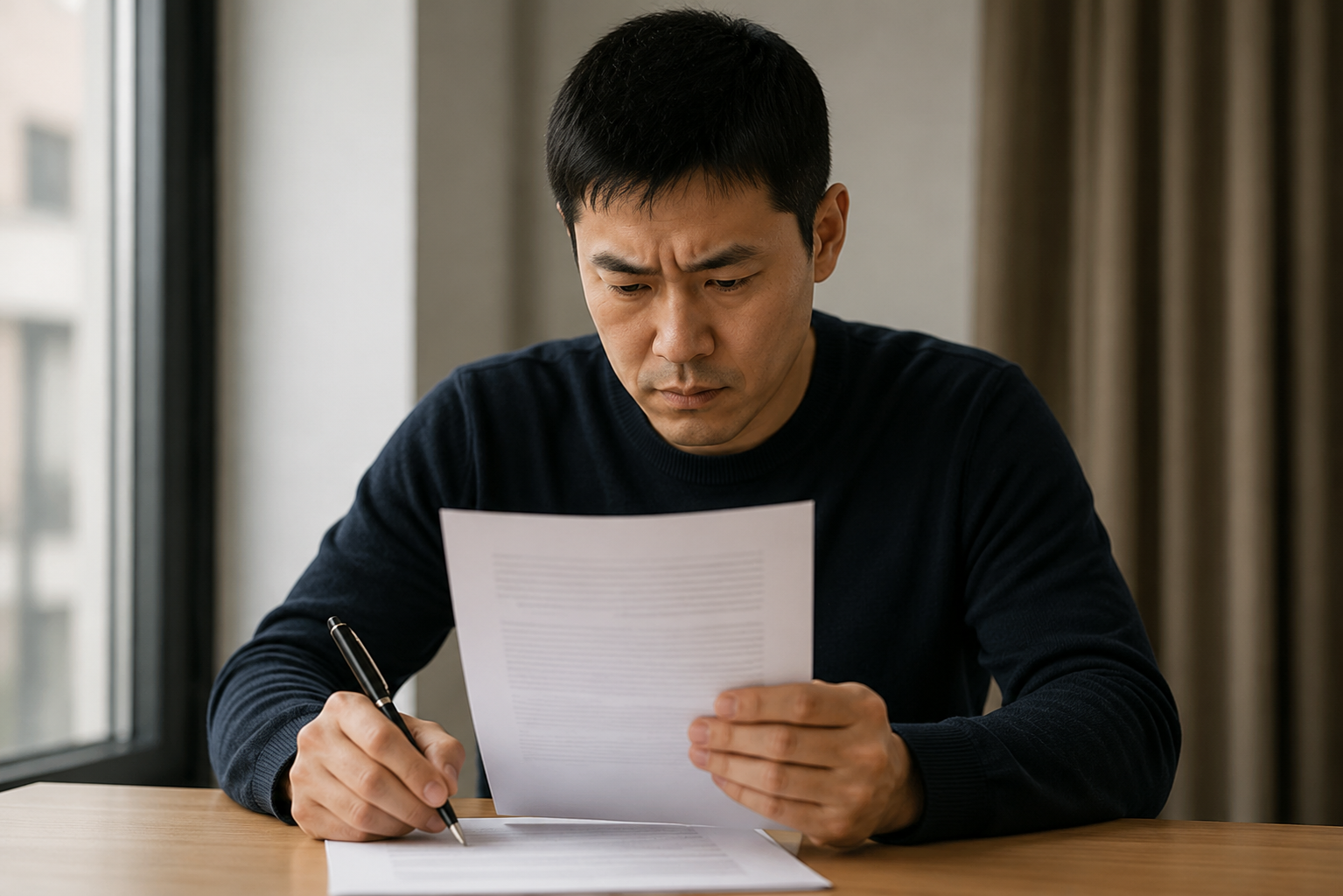
Rental scams targeting foreigners in Korea are real, and they're more common than most people expect. The good news: they're also largely preventable if you know what to look for. This guide breaks down the five most common rental scam types in Korea, the red flags to watch for in each, and the specific checks you can run before signing anything.
Why Foreign Renters Are Targeted
Foreign renters in Korea are disproportionately vulnerable for a few consistent reasons: unfamiliarity with the Korean legal system, language barriers that make contract verification difficult, time pressure — especially for international students arriving before a semester — and a tendency to trust landlords or agents without independent verification. Scammers know this, and they exploit it.
None of these vulnerabilities are permanent. They're all addressable with the right information and the right process.
A Note on Wolse vs Jeonse: Why Most Foreigners Should Choose Monthly Rent
Before getting into specific scams, one general piece of advice: for most foreign renters, wolse (월세, monthly rent) is significantly safer than jeonse (전세, lump-sum deposit).
With wolse, you pay a relatively small deposit (typically ₩5–20 million) and a monthly rent. Your financial exposure is limited. With jeonse, you hand over a large lump sum — often ₩100–300 million — to the landlord upfront, in exchange for living rent-free. If anything goes wrong with the landlord's finances, that entire sum is at risk.
Jeonse scams have caused significant losses for both Korean and foreign tenants in recent years. Unless you have a specific reason to consider jeonse and fully understand the risks, stick to wolse. The monthly payments are worth the peace of mind.
Scam Type 1: Fake Listings (허위매물)
What it is: A listing that doesn't exist as advertised — either the unit has already been rented, never existed, or looks nothing like the photos. The goal is to get you to contact the agent, who then pushes you toward different (worse) listings once you're engaged.
How it happens: Korean real estate apps like Zigbang and Dabang are full of fake or outdated listings. Agents post attractive units at below-market prices to generate inquiries, then tell you the unit is "just rented" and offer alternatives. For foreigners searching remotely, fake listings are harder to detect.
- Price is significantly below market rate for the area
- Photos look professionally staged or don't match the building exterior
- Agent says the unit was "just rented" immediately after you inquire
- Pressure to commit quickly to another unit "before it goes"
- Use platforms that verify listings before publishing
- Ask for the exact address and cross-reference with Naver Maps
- Request a live video walkthrough or current photos
- Never pay any money before verifying the unit actually exists
Scam Type 2: Unauthorized Subletting (무단 전대)
What it is: The person renting you the unit is a tenant themselves — not the owner — and doesn't have the owner's permission to sublet. The original tenant collects your deposit and monthly payments but has no legal right to do so. When the owner discovers the situation (or when the original tenant's lease ends), you can be evicted with no legal recourse.
How it happens: Common in goshiwons and older villa buildings where ownership is less transparent. The "landlord" may seem legitimate — they have keys, they show you the unit, the space looks normal. The problem only surfaces later.
- Person seems eager to avoid paperwork or official contract
- Asked to pay cash rather than bank transfer
- The person can't produce ownership documents confirming their name as owner
- Contract doesn't include the property owner's official information
- Check the 등기부등본 (property registry) and confirm the person you're contracting with is the registered owner — your agent should provide this; check the 갑구 section for ownership
- Pay deposit by bank transfer to the account matching the owner's name on the registry
- If you need to pay by cash, keep on mind to check if they are the actual owner
Scam Type 3: Ownership Transfer After Signing (계약 후 명의 변경)
What it is: The owner sells the property or transfers ownership after you've paid your deposit. The new owner may claim no responsibility for a deposit paid to the previous owner — leaving you in a legal grey zone.
How it happens: This scam exploits the window between when you pay your deposit and when you complete legal registration. If you don't file your address registration quickly after moving in, a new owner may not be legally obligated to return your deposit.
- Landlord discourages you from completing address registration
- Property appears listed for sale while you're in the process of signing
- Landlord is vague about when you should "officially" move in
- Complete your address registration (체류지변경신고 for foreigners) and obtain 확정일자 on your lease as soon as you move in — within 14 days
- Check the 등기부등본 one final time just before transferring the deposit
- Do not delay registration for any reason
Scam Type 4: Deposit Disputes at Move-Out (퇴거 시 보증금 분쟁)
What it is: At move-out, the landlord either claims excessive deductions from your deposit — attributing normal wear and tear to tenant damage, or fabricating repair costs — or simply refuses to return the deposit at all.
Why foreign renters are especially vulnerable: Foreign students often leave Korea a few days before their contract technically ends to catch flights home. Once you've handed over the keys and left the country, you've lost your strongest negotiating position. Landlords know this and some take advantage of it. Pursuing a deposit dispute from abroad is difficult, expensive, and often feels not worth the effort — which is exactly what some landlords count on.
- Landlord proposes skipping the joint move-out inspection
- Deductions are claimed verbally rather than in writing, or appear suddenly after you've left
- Repair costs claimed significantly exceed the actual scope of any damage
- Landlord stalls the deposit return past the contract end date without explanation
- Photograph every room thoroughly at move-in and have your landlord acknowledge existing damage in writing before moving your things in
- Schedule a joint move-out inspection and document everything in writing with the landlord present
- Do not hand over the keys until you have written confirmation of what (if any) deductions will be made
- If you must leave early, arrange for a trusted person to represent you at the move-out inspection — or at minimum get the landlord's written confirmation of the deposit return amount before you leave Korea
- Under the Housing Lease Protection Act (주택임대차보호법), landlords must return the deposit by the contract end date. If withheld, you can file a claim through the Residential Lease Dispute Mediation Committee (주택임대차분쟁조정위원회) before pursuing more expensive legal action
→ Your Korean Landlord Won't Return Your Deposit: What to Do
Scam Type 5: Unverified Direct Deals (검증되지 않은 직거래)
What it is: Renting directly from a landlord without a certified real estate agent (공인중개사). Direct deals (직거래) are legal in Korea — but the absence of a third-party agent means there's no built-in verification step. For foreign renters who aren't familiar with the process, that gap is where problems occur.
How it happens: Direct deals are common on platforms like Danggeun Market (당근마켓) and in certain goshiwon and villa buildings. Direct deals can save the agent fee (중개보수), but most Korean renters still go through a certified agent precisely because the verification process is easier that way. For foreign renters who skip the verification steps because they're not sure what they are, the same deal can go badly wrong — not because direct deals are inherently dangerous, but because the protections a certified agent normally handles have to be done independently.
- Landlord is reluctant to use a standard lease agreement (표준임대차계약서)
- No certified agent stamp or signature on the contract
- Landlord claims the agent fee is unnecessary and you can "save money" by going direct
- Pressure to sign quickly before you've had time to verify anything
- Direct deals are fine — but the verification steps become your responsibility. Pull the 등기부등본, confirm ownership, use the standard contract form, and verify the deposit transfer account before sending money
- If you're not confident doing these steps in Korean, having a certified agent is worth the fee — typically 0.3–0.4% of the [deposit + monthly rent*70] for lower-value contracts
→ Certified Agent vs Direct Deal: What Foreign Renters in Korea Need to Know
The Three Checks That Prevent Most Scams
Almost every rental scam in Korea can be prevented by running three checks before you sign or transfer any money:
✅ Check 1 — Read the 등기부등본 your agent provides
Your agent or the listing agency should provide the property registry (등기부등본) before you sign. You don't need to pull it yourself — but you do need to look at two sections:
- 갑구 (Section A): Shows who owns the property. The name here must match the person you're contracting with and the bank account receiving your deposit.
- 을구 (Section B): Shows mortgages and liens. If the property has heavy existing debt, your deposit may not be recoverable if the owner defaults.
✅Check 2 — Pay deposit only by verified bank transfer
Transfer only to the account matching the registered owner's name on the 등기부등본. Never cash, never an agent's account, never a third party.
✅Check 3 — Complete address registration immediately after moving in
For foreign nationals, this means 체류지변경신고 (change of residence registration) — not 전입신고, which is the Korean citizen equivalent. Complete this at your local district office (주민센터), immigration office, or online via Hi Korea (www.hikorea.go.kr) within 14 days of moving in. Then obtain 확정일자 on your lease at the same office. These two steps legally protect your deposit.
⚠️ ARC required: You must have your Alien Registration Card to complete 체류지변경신고. If you don't have your ARC yet, prioritize getting it. You can register your residence when applying for the ARC, and it will be considered as the change of residence.
Rental scams in Korea are preventable. The pattern is consistent: foreigners who skip the verification steps are vulnerable; those who complete them aren't. The steps aren't complicated, but they do require knowing they exist in the first place.
If you want to make sure you're covered from search to move-in, CheckmateKorea's team handles the verification process, and also provides contract signing accompaniment service.