
Korean Apartment Move-Out Restoration Guide: What You Owe vs. Normal Wear
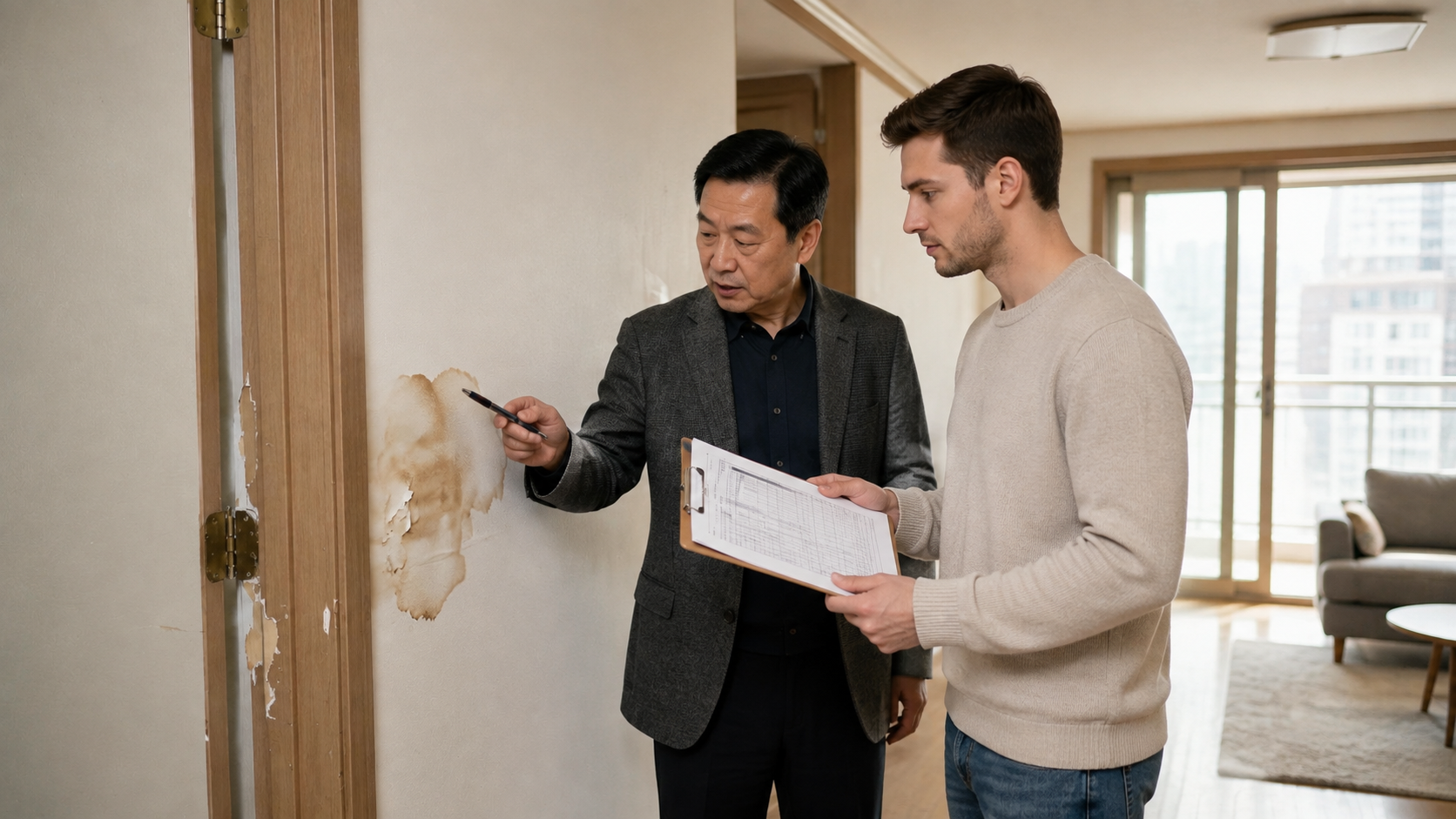
You're moving out, and the landlord is inspecting the apartment: a couple of small picture hook holes, wallpaper fading near the window, or minor scuffs on the floor. Then comes the question that impacts your deposit return: how much of this are you responsible for restoring?
Many foreign tenants end up confused or overcharged simply because they don't know where the legal line sits in Korea. At the same time, landlords want to ensure their property is returned in good condition.
Understanding the official standards for property restoration (원상복구) protects your deposit while keeping your relationship with your landlord respectful and fair.
The Core Principle: Natural Aging vs. Actual Damage
Korean civil law (Civil Act §654) requires a tenant to return the property upon move-out—but with a crucial distinction between normal living wear and actual damage.
- Tenant Responsibility: Damage caused by intent, negligence, improper care, or unauthorized alterations (things broken or altered beyond normal use).
- Landlord Responsibility: Ordinary wear and tear (통상의 손모) and natural age-related deterioration resulting from normal, everyday living.
Korean courts and dispute mediation committees consistently hold that ordinary wear and tear is already covered by the monthly rent or lease agreement. Natural aging is not the tenant's financial burden to fix.
What You Owe vs. What You Don't
| Category | Generally Landlord's Responsibility (Ordinary Wear) | Generally Tenant's Responsibility (Damage/Negligence) |
|---|---|---|
| Walls & Wallpaper | Sunlight fading, minor pin/nail holes for picture hanging* | Pet tears/scratches, heavy crayon/ink stains, large holes drilled without consent |
| Flooring | Light scuffs from walking, subtle sun-bleaching near windows | Deep gouges, floor burn marks, heavy scratches from dragging unpadded furniture |
| Fixtures & Silicone | Natural yellowing of silicone joints, gradual wear of door handles | Broken cabinet doors, cracked bathroom tiles from dropped heavy objects |
| General Living | Minor dust/dirt cleanable by standard turnover cleaning | Accumulated mold from lack of room ventilation, unapproved interior wall painting |
*Small pin holes for hanging pictures generally fall under normal use, while large drilled holes (타공) for shelves or heavy TV brackets usually lean toward tenant restoration.
The Depreciation Rule (감가상각)
When an item does need repair or replacement due to tenant damage, landlords cannot simply charge the full cost of a brand-new replacement if the item was already old.
Under standard housing guidelines, interior materials have recognized lifespan expectancies:
- Wallpaper (도배) & Vinyl Flooring (장판): Recognized lifespan of approximately 6 years.
How this protects you: If wallpaper was already 4 years old when you moved in and you lived there for 2 years, its remaining asset value is close to zero. Even if damaged, you owe only a fraction of the replacement cost reflecting its remaining lifespan (감가상각), not the cost of brand-new wallpaper for the entire apartment.
Two Best Practices to Protect Your Deposit
1. Document Property Condition on Day One
Take clear, timestamped photos and videos of every room, floor, wall, and existing flaw when you first move in. Send a copy to your landlord or realtor via KakaoTalk or email with a polite note: "Sharing photos of pre-existing conditions noted upon move-in." ("입주 시 확인된 기존 훼손 사진 공유해 드립니다.")
This neutral record prevents confusion at move-out regarding which marks were already there.
2. Note Pre-Existing Damage in the Contract (특약)
If there is noticeable damage during your initial viewing, ask to have it written into the special agreements section (특약사항): e.g., "Tenant is not responsible for restoring existing tear in bedroom wallpaper."
→ What to Check When Viewing an Apartment in Korea: A Room Inspection Guide for Foreign Renters
How to Handle Restoration Disagreements Politely
If there is a disagreement over restoration costs or a deduction from your deposit, avoid aggressive arguments. Frame the discussion around standard legal guidelines and depreciation.
Recommended Approach & Text Template:
Politely request an itemized breakdown and ask to apply standard depreciation principles.
"안녕하세요 임대인님, 정산해 주신 원상복구 비용 관련하여 문의드립니다. 한국 임대차 표준 기준(통상의 손모 및 사용 기간에 따른 감가상각)에 따라 합리적으로 조정이 가능한지 확인 부탁드립니다."(Hello [Landlord], I am writing regarding the restoration settlement amount provided. Could we review this together based on standard Korean housing practices, taking into account ordinary wear and depreciation?)
If an agreement cannot be reached directly, official platforms like the Housing Lease Dispute Conciliation Committee (주택임대차분쟁조정위원회) or Korea Legal Aid Corporation (대한법률구조공단) provide free or low-cost mediation to ensure a fair settlement for both sides.
→ When a Landlord Won't Return Your Deposit
→ Moving House in Korea: Types of Movers, Costs & Large Waste Disposal
The Short Version
You must restore damage you caused through intent or negligence — but not ordinary wear and tear, which the rent already covered. Faded wallpaper, furniture marks, and natural aging aren't yours to fix; holes you drilled and things you broke are. The longer you lived there, the more depreciation reduces what you owe. And the two habits that protect you most are photographing everything on move-in day and noting existing damage in the contract. Do those, know the principle, and you keep the deposit that's rightfully yours.
Contesting an unfair restoration charge in Korean, at the moment you're trying to get your deposit back and leave, is genuinely hard to do alone. CheckmateKorea's move-out support helps foreign tenants hold the line on what they actually owe.