
You Moved In and Found a Problem: Repairs and Defects in Korea
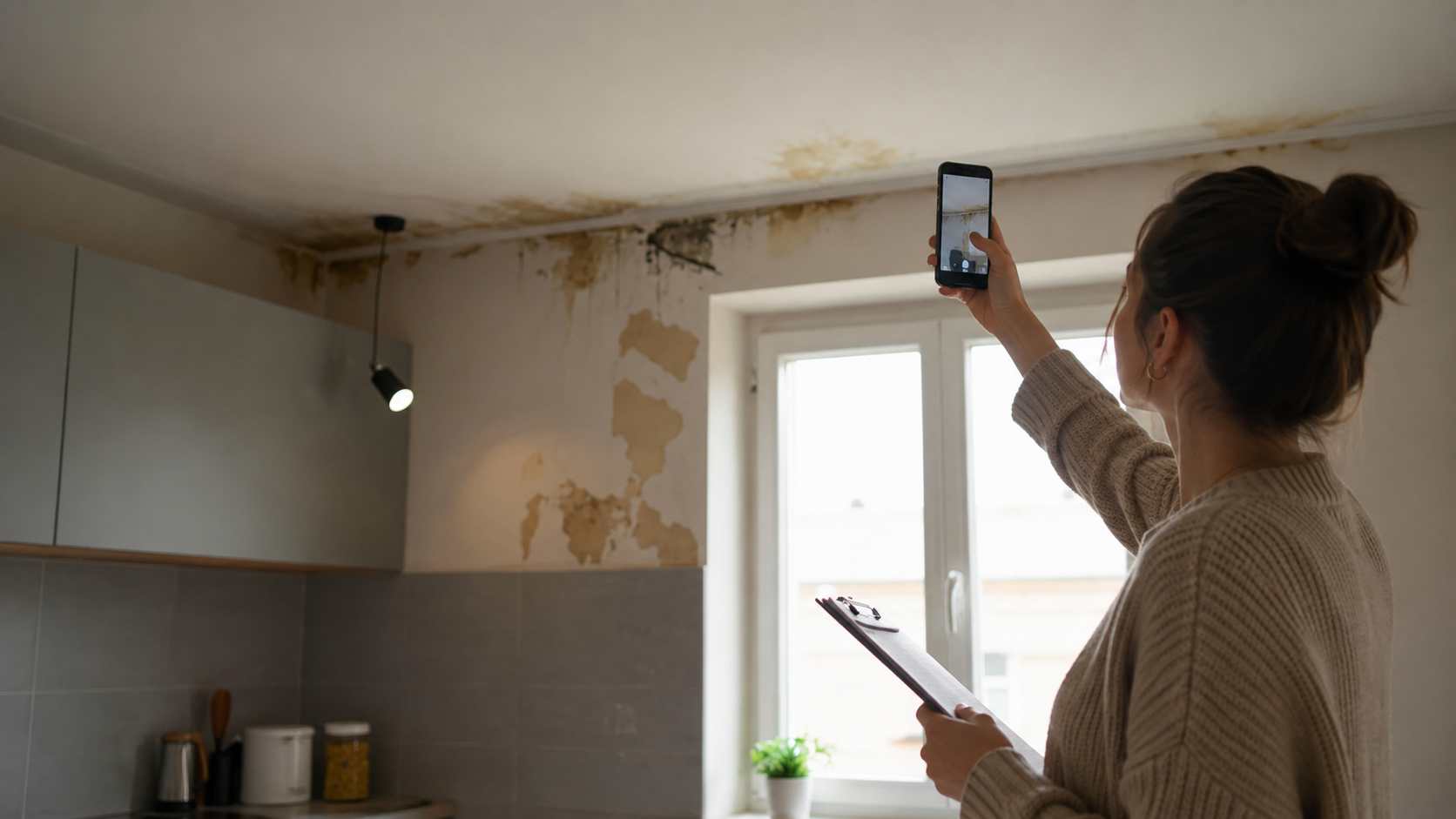
You've moved into your Korean apartment and something's wrong. Mould creeping up the bathroom wall. A leak from the ceiling. A boiler that won't heat in the first cold week. The tap pressure that seemed fine on the viewing but isn't.
The question is always the same: whose responsibility is this, and how do I get it fixed? In Korea, the answer depends mostly on the size of the problem — and the law is clearer, and more on your side, than many foreign tenants realise.
The Basic Rule: Big Problems Are the Landlord's
Korean law sets a default that a lease can't easily override. Under the Civil Act (민법 제623조), the landlord must deliver the property and maintain it in a condition fit for use throughout the lease. That's not a courtesy — it's a legal obligation.
The courts have drawn a clear line based on the scale of the repair:
The landlord's responsibility — major repairs and essential systems:
- Leaks (ceiling, water pipes, waterproofing)
- Boiler failure / heating
- Electrical system faults
- Structural issues — wall cracks, major damage
- Plumbing and water supply
- Serious mould caused by structural defects (damp, exterior water seepage, insulation issues)
- Meter faults, broken windows from wear
The tenant's responsibility — minor upkeep and consumables:
- Light bulbs, shower heads, door-lock batteries
- Small fixes you can do cheaply and easily
- Damage you caused through misuse or negligence
- Mould resulting from poor ventilation, excessive indoor humidity, or lack of basic care
- Insect screens and glass broken through everyday use
The governing principle from the Supreme Court: the landlord is responsible for anything serious enough to interfere with your normal use of the home. A flickering light you can fix for a few thousand won is yours. A boiler that won't heat in winter is theirs.
💡 This holds even against a "tenant pays for repairs" clause. Korean courts have repeatedly ruled that a general clause shifting repairs to the tenant only covers minor repairs. Major repairs — boiler, serious leaks, essential systems — remain the landlord's responsibility regardless of what the contract says. A blanket "임차인 부담" clause does not make you responsible for a broken boiler.
What Counts as "Interfering With Normal Use"
This is the test that decides most disputes, so it's worth understanding.
The courts ask whether the defect prevents you from living in the home normally — not whether it's merely inconvenient or unattractive.
Clearly the landlord's (interferes with living):
- No heating in winter
- Water leaking into the room
- No hot water
- Electrical faults making rooms unusable
Greyer area (may be judged inconvenient rather than disabling):
- A doorbell that works but crackles
- Minor cosmetic damage
- A single fixture that's awkward but functional
If a defect genuinely stops you using part of the home as intended, the law is on your side. If it's a minor annoyance, the landlord can more reasonably decline.
Before You Report: The One Thing That Protects You
Everything about resolving a defect well comes down to records. This starts on the day you move in, before any problem appears.
Document the condition on move-in day. Photograph and video every room, every appliance, the meters, the walls, the bathroom, and anything already damaged — with timestamps. Send anything pre-existing to the landlord immediately so it's on record that it was there before you.
This move-in record is what separates "a defect the landlord must fix" from "damage the tenant caused." Without it, a dispute can turn into your word against theirs. With it, the facts are settled.
→ What to Check When Viewing an Apartment in Korea: A Room Inspection Guide for Foreign Renters
How to Report a Defect
Korean law gives you a duty to notify (민법 제634조): when the property needs repair, you must tell the landlord without delay. This isn't just an obligation — reporting promptly and in writing is what builds your case if the landlord drags their feet.
Do it in writing. KakaoTalk is the standard record in Korea and is treated seriously. A phone call leaves no trace; a message does.
Be specific and factual. What the problem is, when it started, and what effect it's having ("the boiler produces no heat, the room has been unheated since Monday"). Attach photos or video.
Ask clearly for a repair and a timeline. Not "is this something you could look at" but "please arrange repair of X."
Keep every message. The thread itself is your evidence.
💡 For most defects, this is where it ends — you report it, the landlord arranges a repair, it's fixed. The escalation steps below are for when that doesn't happen. Most landlords fix genuine problems, especially when asked clearly and in writing.
If the Landlord Won't Fix It
When a landlord ignores or refuses a legitimate major repair, you have real options — but build the record first.
What you need to establish (the three elements):
- The landlord knew or should have known about the defect
- You requested the repair and the landlord left it unaddressed
- The neglect caused you actual, quantifiable harm
All three, evidenced by messages, photos, and receipts.
Your escalation options:
- Keep requesting in writing, creating a clear record of the landlord's non-response and the time elapsed.
- Arrange the repair yourself and reclaim the cost. If a landlord neglects a repair that's legally theirs, you may be able to have it done and deduct the cost — but do this carefully and only for clear-cut major repairs, with the earlier written requests on record. Getting this wrong can create its own dispute.
- Claim consequential losses. If a neglected leak damaged your belongings, or a broken boiler forced you to stay elsewhere, those costs can be claimable — provided you can prove the three elements above with messages, photos, and receipts.
- Send a 내용증명 — a certified content-proof letter. This is a formal, dated record that you demanded the repair, and it often prompts action on its own because it signals you're serious.
- The rent question (Withholding rent). Can you stop paying rent if the landlord ignores a major repair? Under Korean Supreme Court precedent, you can only withhold rent in proportion to the degree that the defect prevents you from using the property. If a broken boiler makes the apartment completely uninhabitable in winter, you may legally withhold rent. However, if the issue only affects a small part of the home (e.g., a broken secondary window or one unusable socket), completely stopping rent payment puts you in breach of contract (임차인 의무 위반). Always seek legal advice before withholding rent.
→ Your Korean Landlord Won't Return Your Deposit. Here's What to Do.
For Foreign Tenants Specifically
The language barrier is the practical obstacle, not the law. The law protects you the same as a Korean tenant — the difficulty is conducting the dispute in Korean. Written records help doubly here: a clear KakaoTalk thread can be translated and understood, where a phone argument can't.
Free help exists. The Korea Legal Aid Corporation (대한법률구조공단, klac.or.kr) provides free consultation and handles cases involving foreign nationals. Local government foreign-resident centres can also help with translation and mediation.
Don't let uncertainty make you accept a serious defect. Foreign tenants sometimes assume they have no standing and live with a broken boiler or a leak because disputing it feels impossible. You have exactly the same rights as anyone else — the barrier is language, and there's help for that.
Keep the move-in record safe. Everything is easier when you can show the state of the place the day you arrived.
Quick Reference
When a defect appears
If ignored
Dealing with a repair dispute in a language you're still learning is genuinely hard — even though the law is on your side. Checkmate Korea's settlement support helps foreign tenants communicate with landlords and resolve problems after move-in.