
A Foreigner’s Guide to Korea’s Management Office (Gwanrisamuso) & Security Desk
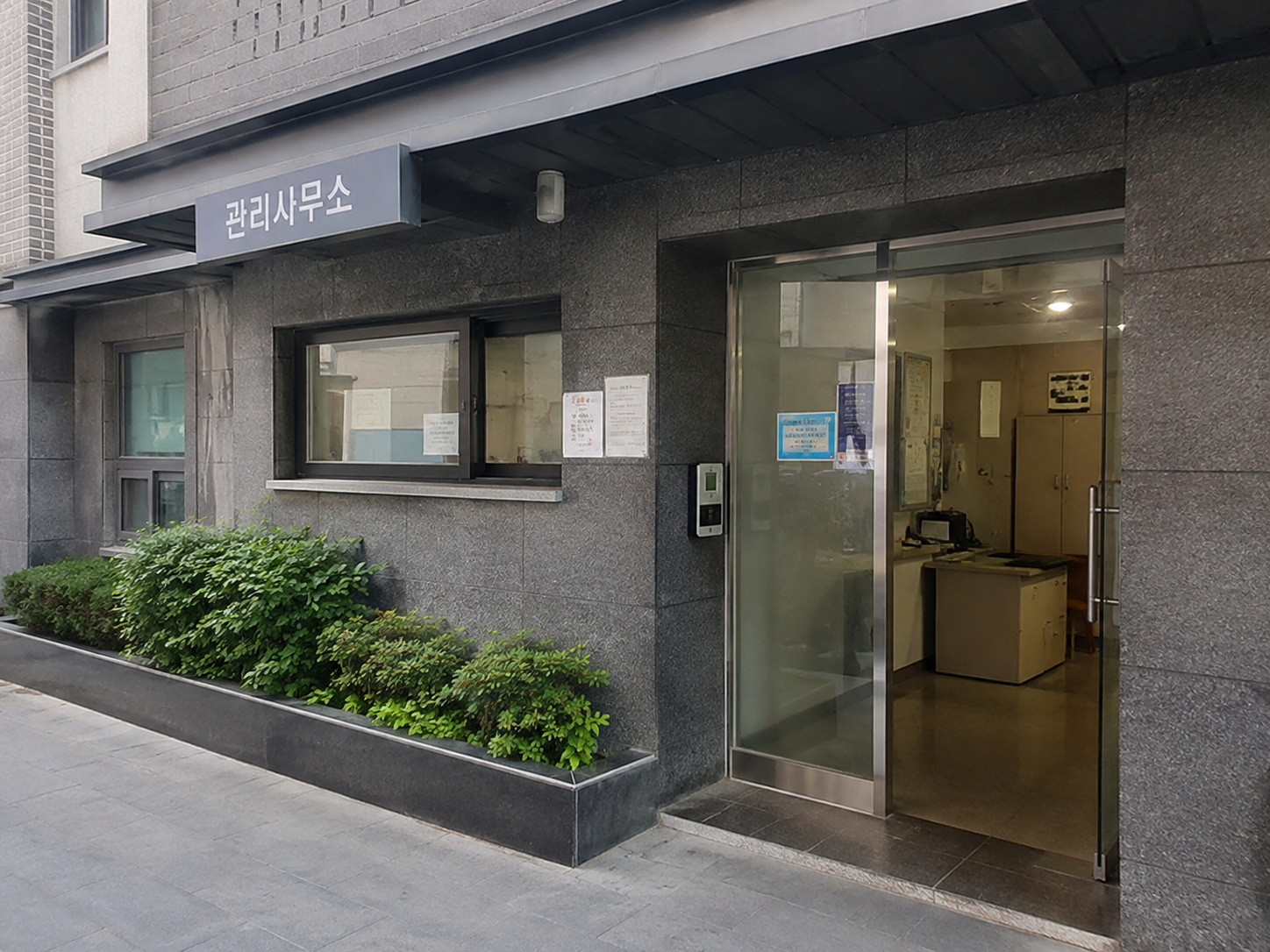
Many Korean apartment buildings have a management office (관리사무소) and a security desk (경비실) — and most foreign residents have no idea how much these can help, or what they're allowed to ask for. They end up struggling alone with problems the front desk would have solved in five minutes.
This guide covers what these offices do, what you can reasonably ask, and how to communicate when your Korean is limited.
Who's Who
관리사무소 (management office). The administrative hub of an apartment complex or larger officetel. Handles the building's maintenance, the shared facilities, the maintenance fee (관리비), parking, and coordination of repairs to common areas. Usually staffed during business hours.
경비실 (security desk / guard post). The front-desk security, often staffed longer hours including nights. Handles building access, parcels, visitor questions, and is often your first point of contact for anything happening in the building right now.
Not every building has both. A large apartment complex usually has a full 관리사무소; a smaller villa or one-room building might have neither, or just a part-time manager (건물 관리인). Officetels often have a management desk.
What They Can Actually Help With
More than most newcomers realise:
Parcels and deliveries
- Clarifying delivery locations or setting up access for couriers. (Note: Many newer buildings use automated parcel lockers—무인택배함—rather than holding packages at the desk).
- Telling you where deliveries are left
- Helping when a delivery can't reach you
Repairs and maintenance
- Common-area problems — corridor lights, lifts, entrance doors, shared plumbing
- Sometimes helping identify whether an in-unit problem is a building issue
- Pointing you to the right contractor or the landlord
Trash & Recycling Rules
- Explaining food waste card systems, recycling days, and how to buy stickers for bulky trash disposal (대형폐기물).
Parking
- How resident parking works, whether you have a spot, visitor parking rules
- Registering your car, parking passes
Building systems
- How the heating, hot water, or shared boiler works
- Water shut-offs, planned maintenance, notices (often posted only in Korean)
- Explaining that Korean-only notice taped to the lift
Access and security
- Building entrance codes, fobs, replacement cards
- Lockout situations (they may hold master access or know who to call)
- Reporting something suspicious
Noise and neighbours
- Most complexes prefer you report noise issues (층간소음) through the security desk via your wall-pad intercom rather than confronting neighbors directly.
→ Noise and Neighbours in Korea: Dealing With 층간소음
What's NOT Their Job
Knowing the boundary keeps the relationship good:
- Repairs inside your unit that are the landlord's responsibility — these go to your landlord, though the office may help identify the cause. (See repair responsibility.)
- Your rent and lease — that's between you and your landlord; the management office handles the building, not your tenancy.
- Personal errands — they manage the building, not individual residents' tasks.
→ You Moved In and Found a Problem: Repairs and Defects in Korea
The 관리비 Connection
The management office administers your maintenance fee (관리비) — so if you have a question about what your 관리비 covers, why it changed, or what a line item means, this is who to ask.
They can usually break down the fee, explain shared costs (cleaning, security, lift maintenance, shared electricity), and clarify what's included versus what you pay separately.
→ Korea Apartment Maintenance Fee (관리비): What's Actually Included
How to Communicate With Limited Korean
The practical obstacle is language, not access. Ways around it:
- Use Translation Apps: Papago handles Korean context better than most apps. Translate your message in advance and show your screen.
- Call via Wall-Pad Intercom: For immediate issues like noise or urgent delivery questions, press the '경비실' button on your wall pad.
Key Phrases to Show or Say:
- Hello, I need help: "안녕하세요, 도움이 필요해서 왔습니다."
- Where is my parcel?: "택배 보관소가 어디인가요?"
- There is a problem with parking: "주차 관련해서 문의드립니다."
- Write it down. A translated note explaining your issue is often clearer than a spoken exchange, and you can prepare it calmly in advance.
- KakaoTalk. Some buildings have a management KakaoTalk channel or number. Text-based communication is easier to translate both ways and leaves a record.
- Building notices. Notices posted in lifts and entrances are usually Korean-only. Photograph them and translate — they cover water shut-offs, inspections, disinfection days, and things you'll want to know about.
- Be polite and patient. A friendly, respectful approach goes a long way, especially with security staff who are often older. Basic Korean greetings and thanks (안녕하세요, 감사합니다) are genuinely appreciated.
Practical Tips
- Introduce yourself when you move in. A brief hello to the management office or security desk makes every later interaction easier.
- Know the office hours. The 관리사무소 is usually business hours; the 경비실 often longer. Know which to approach when.
- Keep the office number saved — for water shut-offs, lockouts, and building emergencies.
- Check notices. The Korean-only notice you ignored might be tomorrow's water shut-off.
- Route neighbour issues through them where the building prefers it — it's less confrontational and often more effective.
The Short Version
Your building's management office and security desk are a resource, not just a formality — they handle deliveries, common-area repairs, parking, building systems, and often noise, and they administer your 관리비. The barrier is language, not permission, and a translation app plus a polite approach clears most of it. Introduce yourself early, keep the number saved, and use them — that's what they're there for.
Getting comfortable with the systems around your building is part of settling in. CheckmateKorea helps foreign residents navigate life in their new place — from the lease through the everyday details