
Door Locks, Entrance Codes, and Getting Locked Out in Korea
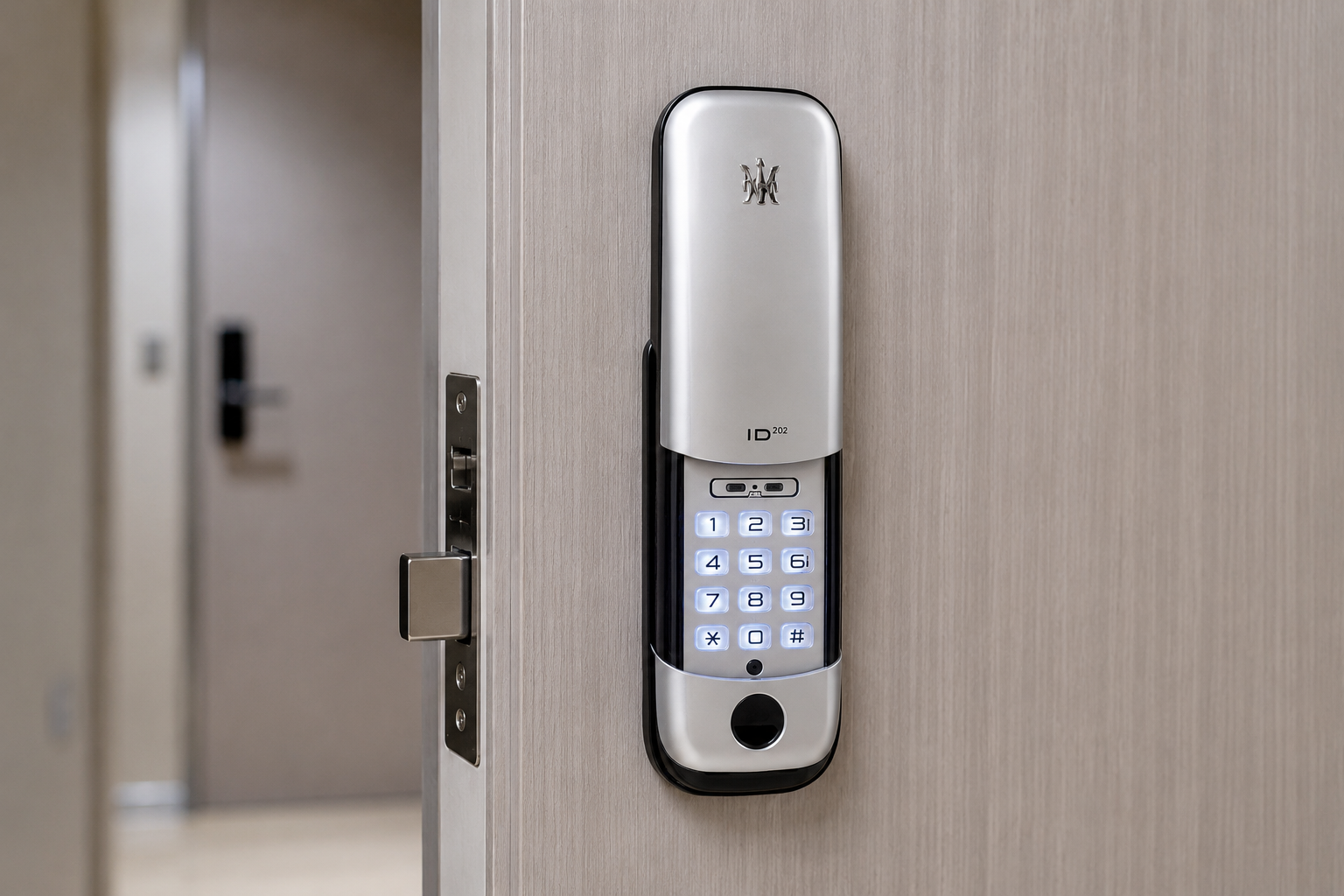
It sounds trivial until it isn't. Korean apartments use digital door locks and building entrance codes that work differently from what many newcomers are used to — and being locked out of your building at midnight, unable to read the Korean instructions on the keypad, is a genuinely stressful first week.
This guide covers how Korean door locks and entrances work, what to do when you move in, and how to handle a lockout.
Digital Door Locks (도어록)
Most Korean apartments have a digital door lock rather than a physical key — a keypad where you enter a code, often with a fingerprint or card option too.
How they generally work:
- Enter your code, then press the confirm key (usually marked with a symbol or *)
- Many lock automatically when the door closes — so you can lock yourself out simply by stepping into the hallway
- Most run on batteries (usually AA), inside the unit on the door
- Some have a physical key backup for emergencies
The auto-lock trap: because many lock the moment the door shuts, stepping out to take the rubbish down or check the mail can lock you out if you don't have your code memorised or your phone. In your first days, before the code is second nature, be careful about this.
The First Thing to Do When You Move In
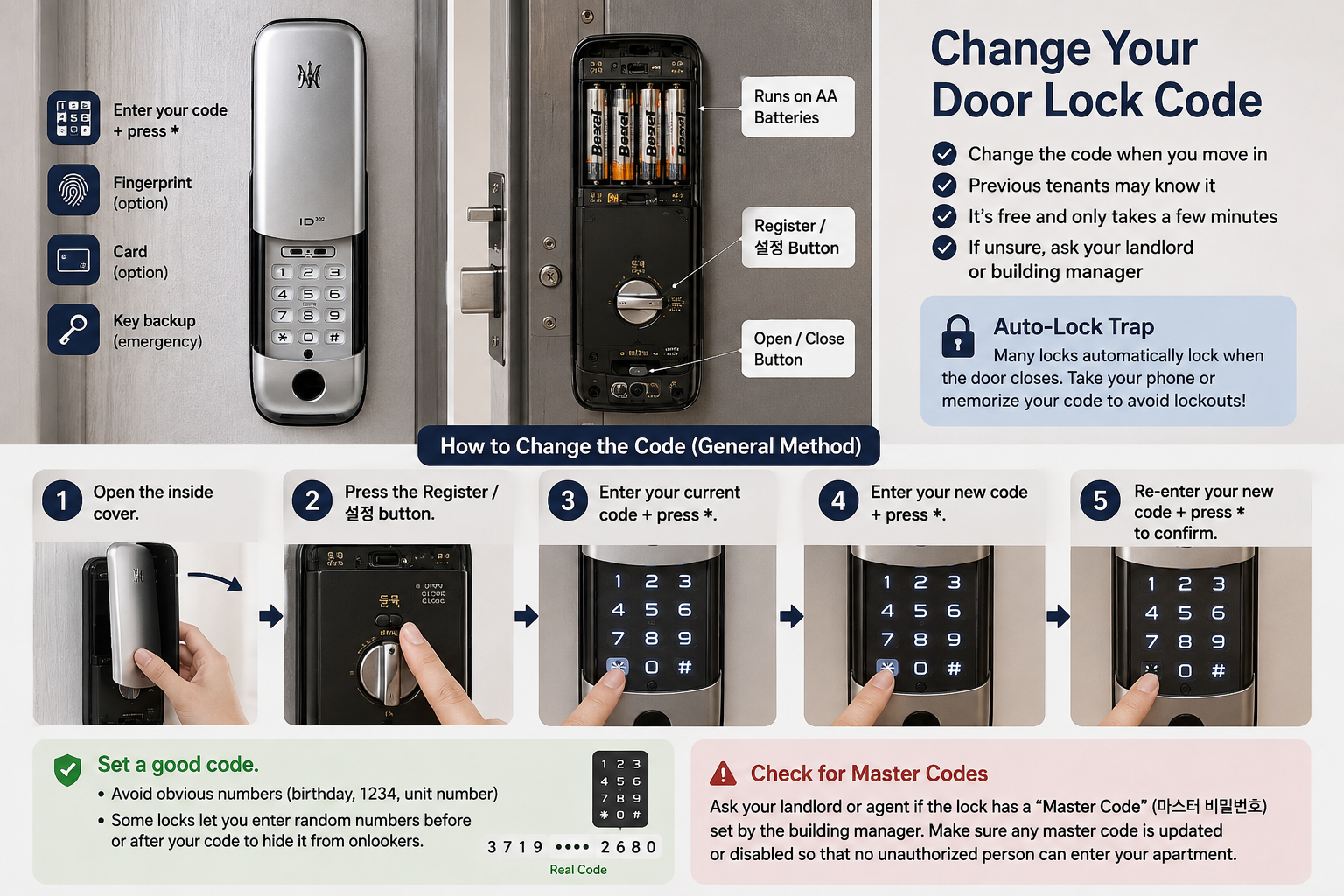
Change the door lock code. The previous tenant, and possibly others, may know the old one.
Changing the code varies by model, but the general method:
- Open the lock's inside cover (on the interior side of the door)
- Find the register/설정 button
- Follow the prompts to set a new code
If you can't work out your specific model, ask the landlord or building manager to show you, or look up the model number online. This is worth doing on day one — it's the single most important security step, and it's free.
→ Finding a Safe Place to Live Alone in Korea
Set a good code. Avoid obvious ones — your birthday, 1234, your unit number. Korean digital locks sometimes let you enter random digits before or after your real code to hide it from onlookers; useful if someone might be watching the keypad.
⚠️ Check for Master Codes: Ask your landlord or agent if the lock has a "Master Code" (마스터 비밀번호) set by the building manager. Make sure any master code is either updated or disabled so that no unauthorized person can enter your apartment.
Building Entrance (공동현관)
Many Korean apartment buildings and officetels have a shared entrance door (공동현관) with its own code or system, separate from your unit door.
Common types:
- Keypad code — a shared building code you enter to get in
- Unit-call entry — enter your unit number, which can also be used by visitors to call you
- Card or fob — tap to enter
- Intercom — visitors call your unit and you release the door from inside
For visitors and deliveries: learn how someone gets buzzed up to your unit, because you'll need to let in delivery drivers and guests. Usually they enter your unit number at the entrance panel, which rings your intercom, and you press the unlock button.
💡 Note your building entrance code somewhere safe (not on the same phone you might lock inside). Being stuck outside the building itself — not just your unit — is a worse version of a lockout.
When You Get Locked Out
It happens. Here's the order to work through it.
- Check for a backup. Some digital locks have a physical key override, or a spare code. If your landlord gave you a physical key "just in case," this is when it matters.
- Contact your landlord or building manager. They may have a spare, a master code, or the model details. The building's management office (관리사무소), if there is one, is often the fastest help during the day.
- Call a locksmith (열쇠 / 도어록 출장). Korea has 24-hour lockout services. Search "도어록 출장" or "열쇠 24시" with your neighbourhood, or ask a nearby convenience store or the building manager for a local number. Expect to pay a call-out fee — more at night — and be ready to prove you live there.
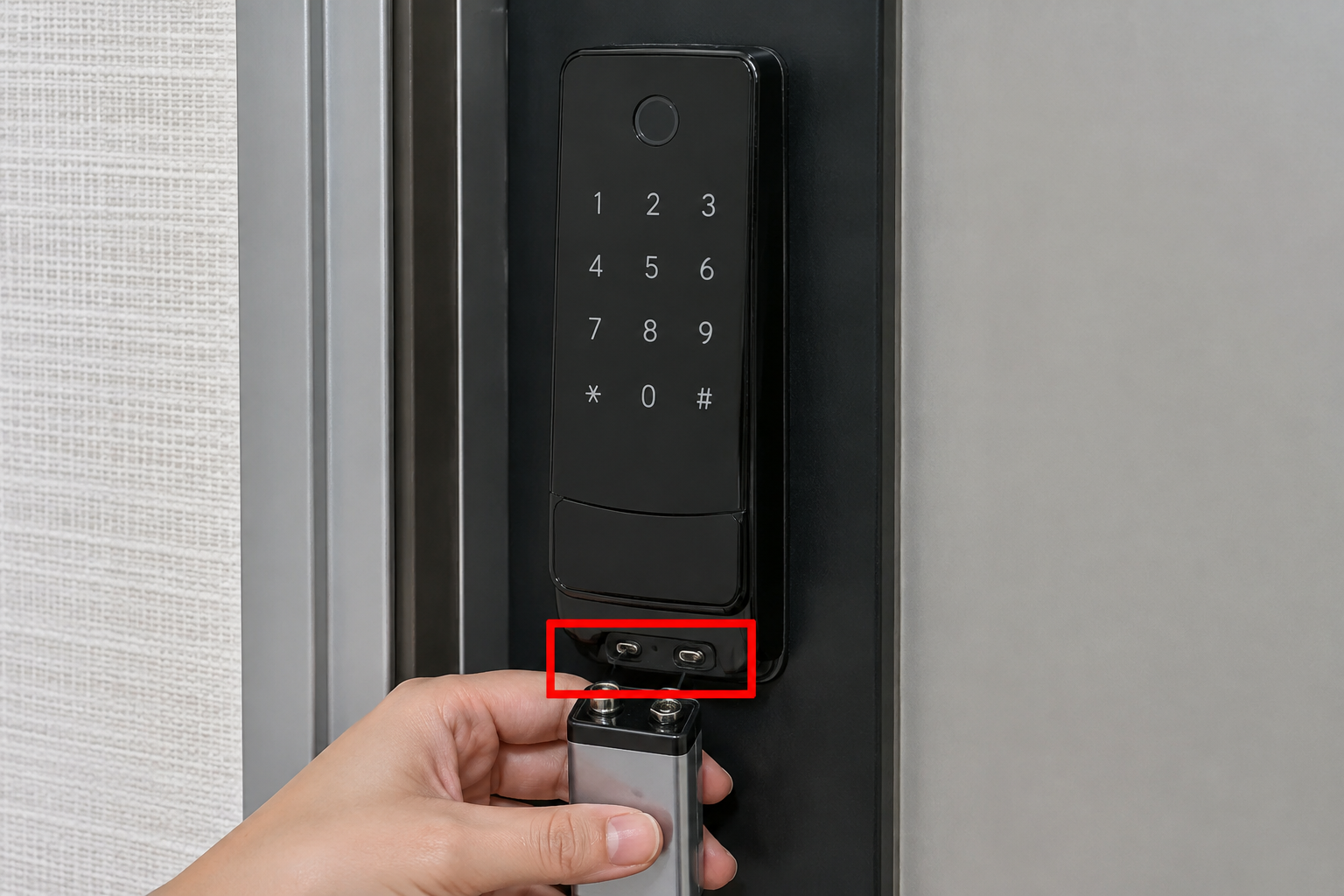
- If the lock is out of battery (The 9V Battery Trick): A dead battery is a common reason people think they are locked out. Almost all Korean digital locks have two metal contact pins on the outside panel (usually at the front or bottom).
- Buy a 9V rectangular battery at a nearby convenience store (CU, GS25, 7-Eleven).
- Hold the battery's contact points firmly against the lock's metal pins.
- While holding it in place, enter your password or tap your key fob to open the door.
⚠️ A locksmith will usually ask for proof that you live there before opening a door — ID with the address, or a lease. This is normal and protects everyone. Have something ready if you can.
Practical Habits
- Memorise your unit code and building code in the first few days, before they're automatic
- Keep a backup of both somewhere that isn't the phone you carry — a note in your wallet, a trusted contact
- Check the battery occasionally; most locks beep or flash a warning when low, but the warning is often in Korean
- Know your building manager's hours and number — they're the fastest help for most access problems
- Keep a local locksmith number saved before you need it
The Short Version
Korean door locks and entrances aren't complicated once you know them, but the first week — before the codes are second nature and while everything's in Korean — is when people get caught out. Change your code on move-in, memorise both your unit and building codes, keep a backup off your phone, and know who to call. That covers almost every problem before it happens.
Small practical things like this are where a new country trips you up most. CheckmateKorea helps foreign residents settle in — from the contract through the everyday details of actually living in your new place.
- How to Register Your Address in Korea After Moving In: A Guide for Foreign Renters →
- Finding a Safe Place to Live Alone in Korea →
- A Foreigner’s Guide to Korea’s Management Office (Gwanrisamuso) & Security Desk →
- How to Use KakaoTalk When Renting in Korea →
- Utility Bills in Korea: Electricity, Gas, Water →