
One Semester in Korea: Housing for Exchange Students Who Didn't Get the Dorm
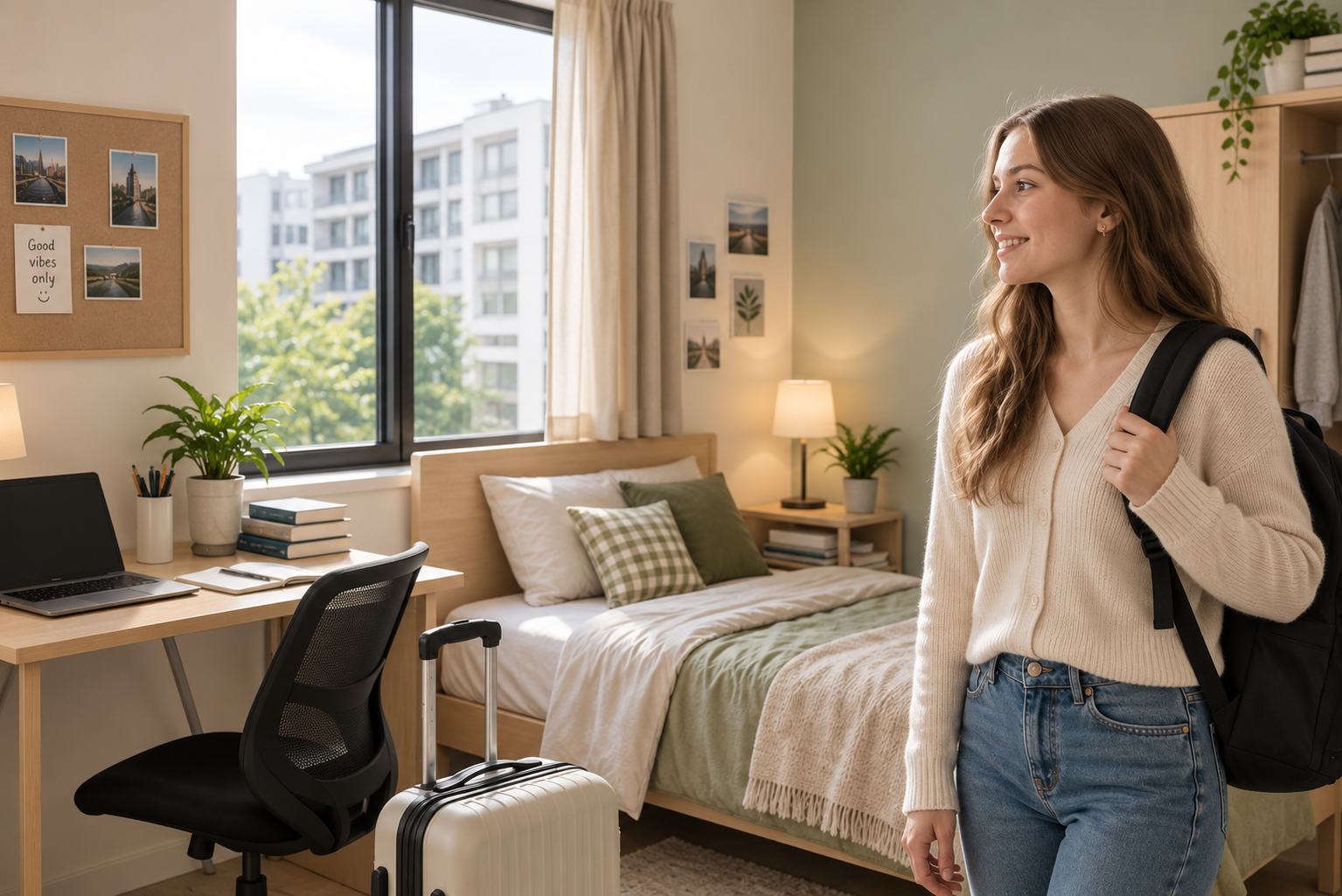
You got into the exchange program. You applied for the dorm. And then the email came back: no space.
If that's where you are, the first thing worth knowing is that this is normal — not a sign you did something wrong. Most Korean universities say dormitory spot isn't guaranteed because demand is so high, and advises students to look at off-campus housing options as well. Exchange students are usually assigned after full-degree students, and the rooms run out.
The second thing worth knowing is harder: finding a place for one semester in Korea is genuinely more difficult than finding a place for a year. Not impossible — but the standard rental market is not built for you, and understanding why is what lets you work around it.
Why One Semester Is the Hard Part
Korean university semesters are roughly four months. <cite index="26-1">Spring runs from March to June, and fall from September to December</cite>. Add a week on either side for arrival and moving out and you need housing for about four and a half months.
The standard Korean lease is 12 months. That's not a preference — it's the market default, and it's tied to how deposits work. A landlord who signs a 4-month lease has to find a new tenant in June or December, off-season, and usually can't. So most simply won't.
This produces the exchange student's core problem:
| What you need | What the standard market offers |
|---|---|
| 4–5 months | 12 months minimum |
| Furnished (you're flying in with luggage) | Empty — no bed, no fridge, no washing machine |
| Deposit you can actually afford | ₩5,000,000–₩10,000,000 typical |
| Contract you can sign from abroad | In-person viewing and signing expected |
| To leave cleanly at semester's end | Early termination is your responsibility and cost |
Every one of those gaps has a workaround. But you have to choose housing types that were built for short stays rather than trying to force a normal one-room lease into a four-month shape.
⚠️ The trap to avoid: signing a 12-month lease intending to leave after one semester and "just deal with it later." Early termination in Korea is the tenant's responsibility — you're typically liable for rent until a replacement tenant is found, plus the agent's fee for re-listing. Students do this every year and it goes badly.
What Actually Works for One Semester
Four realistic options, roughly cheapest to most expensive.
Goshiwon (고시원)
Month-to-month, no deposit, utilities included, furnished. On paper it's the perfect exchange-student solution — and for a four-month stay it genuinely can be.
The catch is size. A goshiwon room is small enough that some have no window, and the shared bathroom and kitchen are a real adjustment. But for ₩300,000–₩500,000/month with nothing due up front, it's the option that removes every financial barrier at once.
Best for: tight budgets, students who'll be out of the room most of the day, anyone who couldn't raise a deposit.
→ Goshiwon in Korea: A Complete Guide for Foreign Renters
Share house (쉐어하우스)
Furnished, low deposit (₩500,000–₩2,000,000), minimum stays often 1–3 months, and contracts frequently available in English. Share houses exist largely because of people in your situation.
You get a private or shared bedroom and share the kitchen and living room. The social side is a real advantage when you're arriving alone for a single semester — the other residents are usually also foreign, also short-term, also new.
Two things to check before signing: whether you're allowed to register your address there (this matters for your ARC), and what the utility cap is.
→ Share House in Korea: How to Find One as a Foreigner (2026 Guide)
Short-term one-room (단기 원룸)
They exist, but they're a minority of the market and priced accordingly — expect to pay more per month than a 12-month tenant would for the same room, because the landlord is pricing in the vacancy risk.
The advantage is that it's a real apartment: your own bathroom, your own kitchen, your own door. If privacy matters to you and the budget allows, this is the closest to normal living.
→ Renting in Korea for 1, 3, 6 Months or Longer
University-affiliated or off-campus housing programs
Some universities maintain lists of approved off-campus buildings, and some exchange programs (CIEE, for instance) arrange housing directly for an additional fee. These are more expensive than arranging it yourself, but they're pre-vetted and handle the paperwork.
Ask your host university's international office whether such a list exists. Not all advertise it.
The Timeline: What to Do and When
The single most common mistake is starting too late. Here's a realistic sequence for a fall semester (Sebtemper start):
| When | What to do |
|---|---|
| ~May–June (acceptance) | Apply for the dorm immediately — first-come, first-served at most universities |
| ~June–July (dorm result) | If rejected, start housing search now, not in February |
| ~July | Decide housing type (goshiwon / share house / short-term one-room), set budget including deposit |
| ~July–August | Contact operators or agents, arrange remote viewings, review contracts |
| ~August | Secure the room; confirm move-in date matches your flight |
| On arrival | Move in, then complete 체류지변경신고 within 15 days |
For a spring semester (September start), shift everything back about six months — dorm results around December, search in January, secure in February.
💡 The gap nobody plans for: your dorm rejection often arrives only a month or two before the semester starts, which is exactly when the market is busiest with regular students. If you can, start looking at off-campus options before the dorm result comes back. Having a backup you've already researched is worth far more than the time you save by waiting.
Arranging It From Abroad
You'll probably be signing from another country, which is the part most students find genuinely stressful. It's doable, but there are non-negotiables.
- Ask for a realistic photo or video walkthrough
- Verify the property and the person you're dealing with before sending money
- Get everything in writing (KakaoTalk is standard and counts)
- Understand exactly what you're paying and when
- Send a deposit to an individual's personal account on the strength of photos alone
- Sign anything you can't read — get a translation of the actual contract, not a summary
- Assume a listing is real because it's well-photographed
Fake listings targeting arriving foreigners are one of the most common rental scams in Korea, and exchange students are a favoured target precisely because they're booking remotely under time pressure.
→ Rental Scams in Korea: 5 Types Foreigners Fall For (And How to Avoid Them)
→ How to Secure Housing in Korea Before You Arrive — Without the Stress
Before You Leave: The Exit
Plan this at the start, not at the end. Whatever you sign, know in advance:
- The exact end date and whether it matches your flight home
- Notice period — how far ahead you must tell them you're leaving
- Deposit return timing — the day you move out, or later? If later, how will they send it after you've left Korea?
- What condition the room must be in
That third point is the one that catches people. If your deposit is returned after your departure date, you need a Korean bank account that stays open, or an arrangement to have it sent abroad. Sort this out in month one, not in your final week.
Also: do not cancel your address registration (체류지변경신고) until your deposit is back. Your legal standing on the deposit is tied to your registered address.
→ Korea Move-Out Guide: How to Get Every Won of Your Deposit Back
The Short Version
Not getting the dorm isn't a crisis, but it does mean you're now solving a problem the standard rental market wasn't designed for. The students who handle it well do three things: they pick a housing type built for short stays rather than fighting a 12-month lease, they start looking before the dorm result arrives, and they verify everything before sending money from abroad.
One semester is long enough to need a real home and short enough that the usual rules don't fit. That's the whole difficulty — and it's manageable once you stop looking for a normal apartment and start looking for the right kind of temporary one.
Arriving for one semester and not sure where to start? Checkmate Korea helps exchange students find and secure housing before they land — with listings, contract support, and accompaniment.
- Dorm vs Off-Campus Housing in Korea: Which Is Right for You? →
- Renting in Korea for 1, 3, 6 Months or Longer →
- Share House in Korea: How to Find One as a Foreigner →
- Goshiwon in Korea: A Complete Guide for Foreign Renters →
- How Much Does It Actually Cost to Start Renting in Korea? First-Month Budget Guide →