
Dorm vs Off-Campus Housing in Korea: Which Is Right for You?
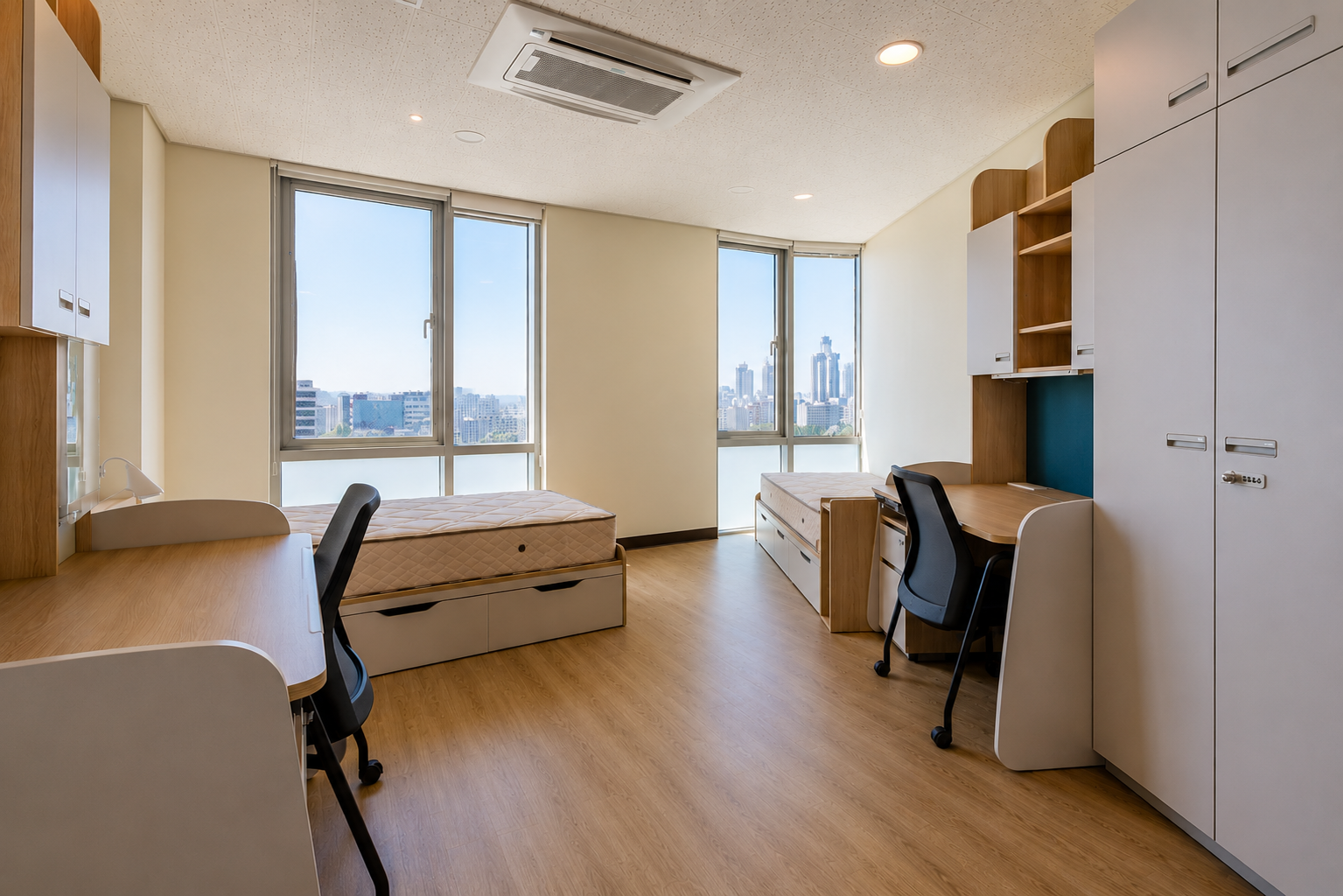
Most universities in Korea offer dormitory housing for international students — but spots are limited, the application process is competitive, and dorms aren't always the best fit for everyone. Here's an honest comparison to help you decide.
The Reality of University Dorms in Korea
Before comparing, a few things worth knowing upfront:
Not everyone qualifies. Most Korean universities offer dorms to international students, but eligibility varies significantly by program type. Degree students, exchange students, and language program students are often managed by different offices with different dorm quotas. Some language programs have no dorm option at all (like Sogang's KLEC regular program). Check specifically whether your program offers dorm access — don't assume.
Spots are extremely limited. Even when dorms are available, demand consistently exceeds supply. At major schools like Yonsei and SNU, available dorm spots for language program students may cover only 10–20% of applicants. Applications fill up within days of opening. Apply immediately after receiving your admission letter — and have a backup plan ready.
Building conditions vary. Some university dorms are modern and well-maintained. Others are older buildings with aging facilities, limited privacy, and minimal soundproofing. The dorm you get assigned to may be very different from the photos on the university website.
Side-by-Side Comparison
| Dorm (기숙사) | Off-Campus (자취방) | |
|---|---|---|
| Cost | ₩800,000 – ₩2,500,000 / semester | ₩350,000 – ₩900,000 / month + deposit |
| Deposit | None or small | ₩3–20 million |
| Contract length | Fixed to semester dates | Flexible (6 months – 2 years) |
| Furnished | ✅ Yes | ⚠️ Varies |
| Meals | Sometimes available | Self-catering |
| Internet | ✅ Included | Extra (₩25,000–₩35,000/month) |
| Utilities | ✅ Included | Extra |
| Privacy | ⚠️ Usually shared room | ✅ Private unit |
| Noise / soundproofing | ⚠️ Variable | ✅ Generally better |
| Curfew / rules | ⚠️ Some dorms have curfews or guest restrictions | ✅ None |
| Building condition | ⚠️ Varies — some older facilities | ✅ Your choice |
| Cooking | ⚠️ Limited or not permitted | ✅ Full kitchen |
| Location | On or near campus | Your choice |
| Availability | Limited, competitive | Wide range |
🏫👍 When Dorms Make Sense
- First semester in Korea If it's your first time living in Korea and you don't speak Korean yet, a dorm removes a lot of friction — no lease to sign, no utilities to set up, no landlord to deal with. You can focus on adjusting to life in Korea rather than navigating the rental market.
- Short program (10 weeks) For language program students on a single semester, dorm costs are often comparable to or cheaper than off-campus rent once you factor in no deposit and utilities included.
- Limited budget for deposit Off-campus housing requires a deposit of ₩3–20 million upfront. If you don't have that capital available before arriving, a dorm is the more accessible option.
🏫👎 When Dorms Are a Disadvantage
- Older facilities Many Korean university dorms — particularly at larger schools where language programs are housed in older residential blocks — have aging bathrooms, basic furniture, and limited storage. Don't expect the facilities to match the tuition cost.
- Curfews and rules Some dorms have curfew policies, restrictions on overnight guests, or rules about cooking and noise. These vary widely by school and building — check the specific dorm rules before applying, not after moving in.
- Shared rooms Most dorm spots are 2-person rooms. You're assigned a roommate — you don't choose them. This works out fine often, but it's worth knowing going in.
- Locked to semester dates Dorm contracts start and end on fixed dates tied to the academic calendar. If you arrive early or leave late, you need to arrange alternative accommodation for those gaps.
- No guaranteed renewal Getting a dorm spot for one semester doesn't guarantee a spot the next. Some dorms only allow new students to apply, or have limits on how many semesters you can stay. Plan accordingly.
🏠👍 When Off-Campus Makes Sense
- Longer stays (6 months+) After one or two semesters, off-campus housing usually becomes more cost-effective — especially once you factor in that dorm contracts are tied to semester dates and don't offer year-round flexibility.
- Privacy matters to you Most university dorms assign you a roommate. Off-campus studios are private.
- You want more freedom No curfews, no check-in requirements, no restrictions on guests or cooking. Off-campus living is simply more independent.
- You didn't get a dorm spot For many students, this decision gets made for them. Off-campus is the practical reality for the majority of international students in Korea.
The Hybrid Approach
Many students do one semester in a dorm to get settled, then move off-campus from the second semester. This gives you time to learn the neighborhoods, find a place you actually want to live, and navigate the rental process with Korean language skills that are slightly better than when you arrived.
Checkmate Korea lists verified, Foreigner-friendly off-campus rooms near Seoul's major universities — filtered for foreigner accessibility.