
D-4 Language Students: Finding Housing That Fits Your Course
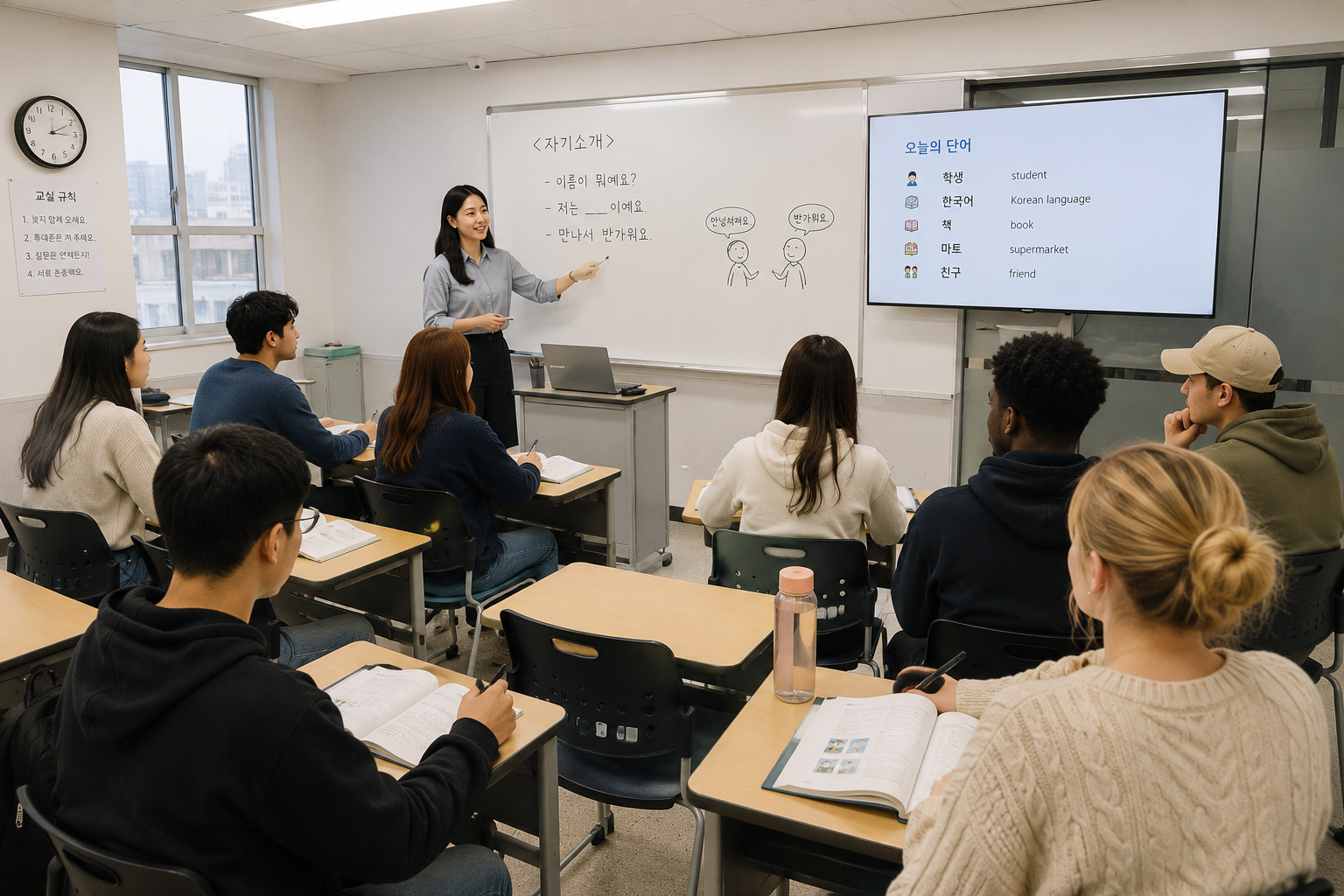
If you're on a D-4 visa, you're in the hardest position in the Korean rental market — not because of anything about you, but because of arithmetic.
Your language course is sold in ten-week terms. The Korean rental market sells twelve-month leases. Your visa may permit a longer stay than your course actually covers. And for the first six months you're here, you're not permitted to work at all.
Every housing decision you make is shaped by those four facts. This guide is about making them work together.
The Numbers That Define Your Situation
Your course: most university language programmes run four ten-week terms a year. Many universities will only issue the Certificate of Admission needed for a D-4 visa if you register for two or more terms at once — roughly six months of study.
Your visa: D-4 permits up to two years per grant, so your legal stay usually exceeds your enrolled course length.
Your work rights: this is the one students most often miscalculate. D-4 holders cannot work at all for the first six months after entry. After six months, you can apply for part-time work permission (시간제취업 허가) from immigration. However, the allowance is limited (generally up to 20 hours per week during term time), and approval requires maintaining good academic standing — typically a course attendance rate of 90% or higher.
Working without that permission is a serious matter: fines, restrictions on extending your stay, and in some cases departure orders.
⚠️ Budget for zero income for six months. This is the single most consequential planning point in this article. Students who budget assuming they'll pick up part-time work in month two are budgeting for something that isn't legally available to them.
Why 10-Week Terms and 12-Month Leases Don't Fit
A landlord signing a twelve-month lease knows when the room frees up and can plan around it. A landlord signing a shorter lease has to re-let the room, possibly in an off-season month, and pay agent fees again. So most simply won't.
That leaves D-4 students in a bind: enrolled for six months, offered leases of twelve.
The tempting mistake: sign the twelve-month lease and deal with it later. This goes badly often enough that it's worth being explicit about why.
Early termination in Korea is treated as the tenant's responsibility. You're typically liable for rent until a replacement tenant is found, plus the agent's fee for re-listing. If you leave Korea when your course ends, you may be negotiating all of that from abroad, with your deposit still held.
→ Early Lease Termination in Korea: What Foreign Renters Need to Know
What Actually Fits a D-4 Timeline
Share house
Minimum stays of one to three months, deposits of ₩500,000–₩2,000,000, furnished, contracts often available in English. This is the most common fit for language students, and for good reason — the commitment length matches your enrolment length.
Confirm before signing that you can register your address there. Without that, foreign registration becomes a problem.
→ Share House in Korea: How to Find One as a Foreigner
Goshiwon
Month-to-month, effectively no deposit, utilities included. The lowest-commitment option available, and the one that removes the deposit barrier entirely.
The trade-off is space and privacy. For a six-month stay on a limited budget, many students find it acceptable; for longer, most don't.
→ Goshiwon in Korea: A Complete Guide for Foreign Renters
Short-term one-room
Real apartments rented on shorter terms, priced at a premium — expect to pay more per month than a twelve-month tenant. If you want privacy and can afford the premium, this is the closest to normal living.
→ Renting in Korea for 1, 3, 6 Months or Longer: What's Actually Possible
University dormitory
Where available, this is usually the cheapest and simplest option, and it's designed around your term dates. The catch is availability — language programme dorms are often limited, allocated first-come, and application windows close weeks before term starts.
Apply as soon as you receive your admission letter. If you're rejected, start looking off-campus immediately rather than waiting.
→ Dorm vs Off-Campus Housing in Korea: Which Is Right for You?
If You Extend Your Studies
Many students arrive for two terms and stay for four. The awkward part is timing: you usually don't know whether you're extending until course registration closes near the end of your term, and your visa extension can only be filed once you have the enrolment documents. Meanwhile your landlord wants to know months earlier whether to list the room.
You can't fix that mismatch by telling your landlord earlier — you don't have an answer to give. What you can do is deal with it at the start.
- Build the option into the original contract. This is the real solution. When you sign, ask for a clause in the 특약사항 (special agreements) section along the lines of: the tenant may extend for a further [6] months on the same terms, by giving notice [1] month before the end date. A landlord evaluating a short lease often prefers this — it gives them a decent chance of avoiding a re-let — and it means you never have to negotiate under time pressure later.
- If that's not in your contract, signal the possibility honestly. Don't announce an extension you haven't decided on, and don't stay silent either. Something like: "I may extend for another term. Registration closes around [date] and I'll confirm immediately after." That's accurate, and it lets the landlord plan when to start showing the room. It also avoids the situation where you promise to stay and then don't.
- Expect the visa result to lag the housing decision. Course registration comes first, then the visa extension application, then the result — and that sequence can run past the point where your landlord needs an answer. If you're close to the line, ask in advance what happens if you need a short bridging period: a month-to-month extension, or a short extension at a higher rate, is often possible if you raise it early.
- Don't commit to a longer lease before your extension is approved. A lease that outlasts your permission to stay is the situation this entire guide exists to prevent. If the timing forces a choice, a short bridging arrangement is safer than signing another six months on the assumption the visa will come through.
→ Visa Extension and Address Change in Korea: What to Update, and When
The Money: What a D-4 Semester Actually Costs
Approximate, for one ten-week term in Seoul, excluding tuition:
| Item | Range |
|---|---|
| Housing (goshiwon) | ₩350,000/month |
| Housing (share house) | ₩450,000–₩700,000/month |
| Housing (one-room, short-term) | ₩600,000–₩800,000/month |
| Deposit (share house) | ₩500,000–₩2,000,000 |
| Deposit (one-room) | ₩5,000,000–₩10,000,000 |
| Food | ₩300,000–₩500,000/month |
| Transport | ₩60,000–₩80,000/month |
| Phone | ₩30,000–₩50,000/month |
Remember: no income for the first six months. Whatever number you arrive at, you need it in hand before you land, not earned along the way.
→ How Much Does It Actually Cost to Start Renting in Korea? First-Month Budget Guide
The ARC Sequence
D-4 students are subject to the same registration rules as everyone else, and the same chicken-and-egg problem: you need proof of address to register, and your ARC to do most other things.
- Apply for foreign registration within 90 days of entry
- Your lease or a certificate of accommodation serves as proof of address
- The card itself takes 3–5 weeks after applying
- After moving, register your address within 15 days
Some universities handle group registration appointments for language students — ask your programme office before booking your own. It's often faster.
→ Renting Before You Get Your ARC: What's Actually Possible
The Short Version
Your course is short, your lease options are long, and you can't work for six months. Those three facts together mean:
- Don't sign a twelve-month lease unless you're confident you'll stay twelve months
- Choose housing types built for short stays — share house, goshiwon, short-term rentals
- Arrive with the full amount you'll need; part-time work is not available early and is limited afterwards
- Confirm address registration is permitted wherever you live
- Negotiate the extension option when you first sign, rather than trying to arrange it later — registration and visa timing rarely give you enough notice to renegotiate comfortably
⚠️ Departure Tip: If you leave Korea permanently after your course, remember that surrendering your ARC at airport immigration automatically cancels your registered address. Always ensure your deposit is completely refunded to your account on your move-out morning before heading to the airport.
None of this makes D-4 housing easy, but it does make it predictable. The students who struggle are almost always the ones who assumed the rental market would accommodate a ten-week term, or that they'd be working by month two.
Finding a room that matches a language course term — rather than the twelve months landlords prefer — is the specific problem CheckmateKorea helps with. Listings, contract support, and settlement help.