
Trash, Recycling, and Food Waste in Korea: A Guide for Foreigners

Almost every foreigner in Korea gets this wrong at first — puts the rubbish out in a black bag, and finds it still sitting there the next day, uncollected. Korea's waste system is stricter and more specific than most countries', and getting it wrong can mean uncollected trash, unhappy neighbours, or a fine.
The good news: once you understand the categories, it's routine. This guide covers the three streams — general waste, food waste, and recycling — and how to handle each.
The Core Rule: Volume-Based Bags (종량제)
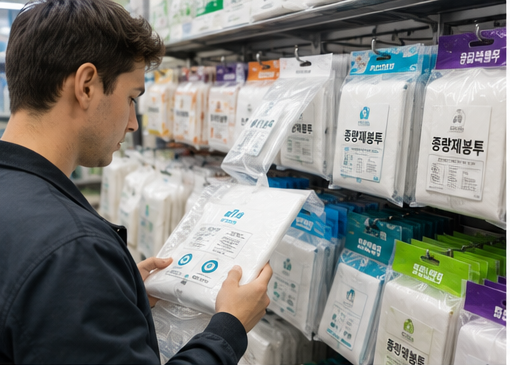
Korea runs a pay-as-you-throw system. You don't just bag your rubbish in any bag — you buy official volume-based bags (종량제봉투) and pay for waste by the bag.
The critical detail: these bags are district-specific. A bag bought in one gu (구) won't be collected in another. Buy the bags for the district you actually live in — from convenience stores and supermarkets, which sell the local ones.
Using the wrong bag, or a regular black bag, means your trash won't be collected. This is the single most common newcomer mistake.
💡 Pro Tip for Moving: If you moved from another district and have leftover volume-based bags, you don't need to throw them away! Visit your new local community center (주민센터) and request Transferred Resident Stickers (전입자 확인 스티커). Attach these stickers to your old bags, and they will be legally collected in your new district.
The Three Streams
1. General waste (일반쓰레기)
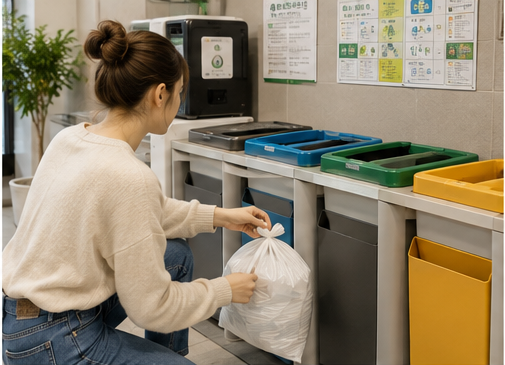
Anything that isn't recyclable or food waste — tissues, hygiene products, contaminated plastics, dust, and so on.
- Goes in the white volume-based bag (종량제봉투) for your district
- Buy the right size for your needs at any convenience store
- Tie it and put it out at your building's designated spot and time
2. Food waste (음식물쓰레기)
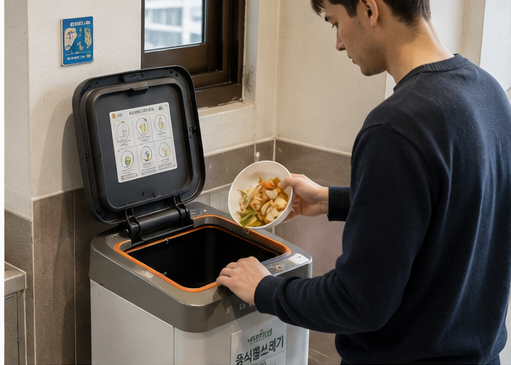
Food scraps are separated from everything else — leftover food, vegetable peelings, rice, noodles.
💡 Drain the water out of food waste before binning it. If you're on an RFID system you're billed by weight, so wet waste literally costs more. Dry it out first.
How it's collected depends on your building:
- RFID weighing machines (RFID 계량기): common in apartments. You scan a card, the machine weighs your food waste, and you're billed by weight. You dump the waste directly, no bag.
- Dedicated food-waste bags (음식물 전용봉투): in some areas, a separate coloured bag (often yellow) bought like the general bags.
- A communal food-waste bin in some buildings.
Ask your building manager or a neighbour which system your building uses — it varies.
What is NOT food waste (these trip people up):
- Bones, large seeds, shells (clam, egg), tea bags
- Onion/garlic skins, corn husks, hard fruit pits
- Anything a pig couldn't eat is the rough traditional test — bones and hard shells go in general waste
3. Recycling (재활용)
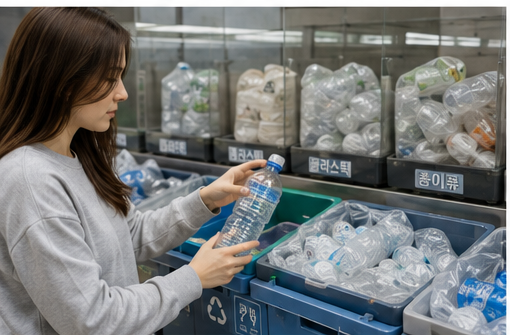
Separated further by material: paper, plastic, glass, cans, PET bottles, and clear vinyl/plastic film.
- Rinse containers before recycling — a dirty container can be treated as general waste
- Clear PET Bottles (투명 페트병): Must be separated from general colored plastics. Strip off the plastic label, rinse, crush the bottle, cap it, and throw it into the designated Clear PET Only bin. This is a strict legal requirement in Korea.
- Apartments usually have a central recycling area with separate bins by material, often collected on set days
- In villas and smaller buildings, recycling goes out on designated days
Common recycling mistakes:
- Clean plastic film and snack/instant-noodle bags are recyclable — don't put them in general waste
- Only food-contaminated film and rubber gloves go in general waste
- Styrofoam must be clean; dirty styrofoam is general waste
The Special Cases
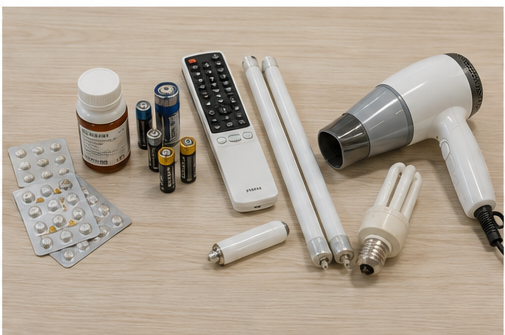
A few items have their own disposal routes and must not go in any of the three streams:
Medicines. Never put old medicine in the bin — return it to a pharmacy, public health centre, or community centre with a medicine collection box (폐의약품 수거함). Pills, syrups, ointments all go back whole.
Batteries and fluorescent bulbs. Separate collection boxes, usually near the recycling area or at the community centre.
Large items (대형폐기물). Furniture, appliances — you can't just leave these out. You buy a disposal sticker (대형폐기물 스티커) from your district (online or at the district office), attach it, and put the item out on the arranged day. Dumping a sofa on the street without a sticker is a finable offence.
Small electronics. Often have a separate collection scheme through the district.
Where and When to Put It Out
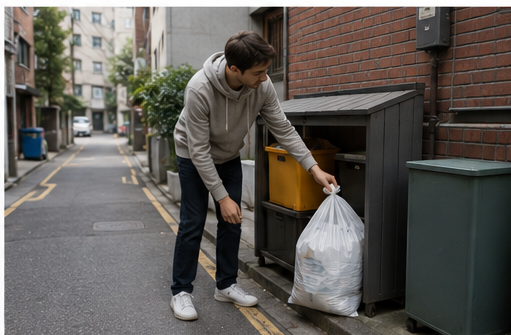
This varies by building type:
- Apartments (아파트): usually a designated waste and recycling area, with recycling collected on specific days. Follow the building's schedule.
- Villas and one-rooms (빌라/원룸): waste goes out at a designated spot, often the night before collection or on set days and times. Putting it out at the wrong time or place can mean it's not collected — and can carry a fine.
Ask your building manager or landlord about your specific building's spot and schedule. This isn't obvious from looking, and it's the thing neighbours notice.
Fines and Why It Matters
💡 If you're unsure, your district office (구청) website has detailed disposal guides, and many districts publish English versions. Your building manager is also a good first source for the building-specific rules.
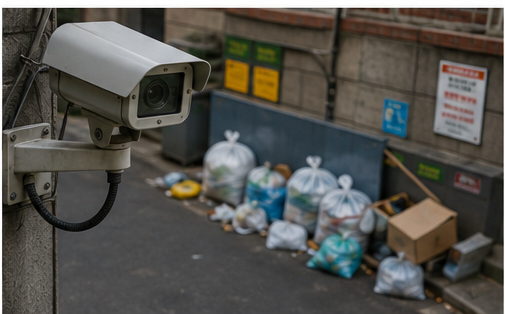
Illegal dumping (무단투기) — putting waste out in regular bags, unsorted, or at incorrect times — is strictly monitored by CCTV cameras installed at disposal sites. District officials routinely inspect uncollected bags for personal identifiers (like delivery receipts or mail). Fines start at ₩100,000 for a first offense and can reach up to ₩1,000,000 for severe or illegal dumping.
Beyond the fine, this is a genuine community matter in Korea. Neighbours notice, and getting it right is part of living considerately in a shared building.
The Quick Version
- General waste → white district volume-based bag (종량제봉투), bought locally
- Food waste → RFID machine, dedicated bag, or communal bin — drained of water
- Recycling → rinsed, separated by material, on collection days
- Medicine → pharmacy collection box, never the bin
- Large items → buy a disposal sticker first
- Buy bags for your own district — other districts' bags aren't collected
- Ask your building manager for your building's spot and schedule
It feels like a lot on day one and becomes automatic within a couple of weeks. Getting it right keeps your trash collected, your neighbours happy, and your wallet fine-free.
Small everyday systems like this are where a new country catches you out. CheckmateKorea helps foreign residents settle in — from the lease through the daily details of living in your place. Get Daily Life Assistance →