
Certified Agent vs Direct Deal: What Foreign Renters in Korea Need to Know
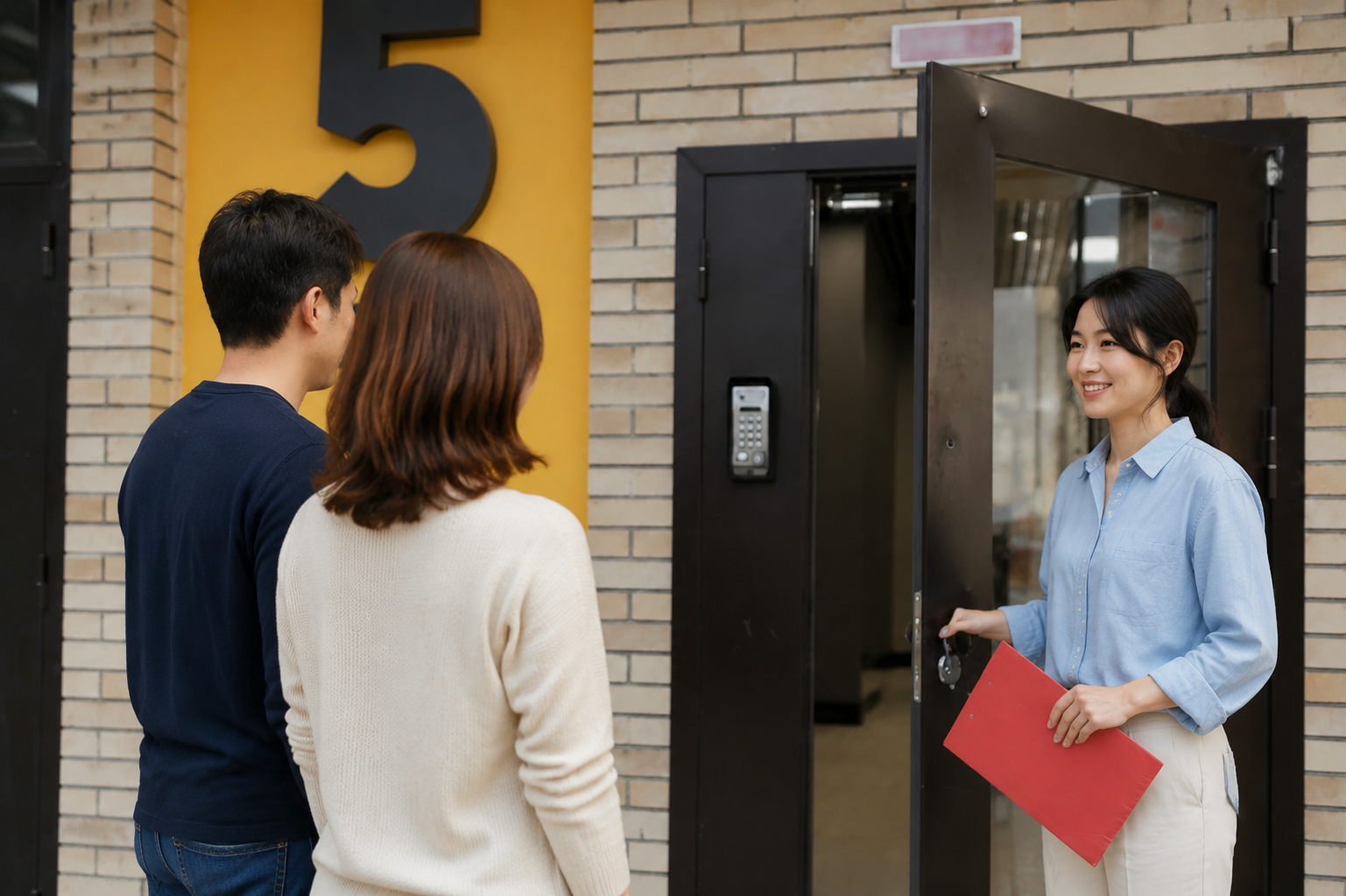
When renting in Korea, you'll come across two ways to find and sign a lease: through a certified real estate agent (공인중개사), or directly with the landlord (직거래). Both are legal. But for foreign renters, the choice matters more than it might seem.
What Is a Certified Real Estate Agent (공인중개사)?
A 공인중개사 is a government-licensed real estate agent. They must pass a national exam, register with the local government, carry professional liability insurance, and operate from a registered office. Most real estate agencies (부동산 or 공인중개사사무소) near subway stations are run by certified agents.
When you sign a lease through a certified agent:
- They verify the property registry (등기부등본) and confirm the landlord's ownership
- They prepare and witness the standard lease agreement (표준임대차계약서)
- They stamp the contract — creating legal accountability if they provided false information
- You pay an agent fee (중개보수), capped by law
→ How Much Is the Realtor Fee in Korea? What Foreigners Often Overpay
What Is a Direct Deal (직거래)?
직거래 means renting directly from the landlord without an agent. You find the listing (often on Danggeun Market / 당근마켓 or through word of mouth), negotiate directly, and sign a contract without a third party involved.
직거래 is legal and saves you the agent fee. For experienced Korean renters who know the verification steps, it can work fine.
For most foreign renters, it's a different story.
Why Direct Deals Are Harder for Foreign Renters
The agent fee isn't just a convenience charge — it buys you a verification layer. Without it, every step that a certified agent normally handles becomes your responsibility:
Verifying ownership yourself — You need to pull the 등기부등본 and confirm the person renting you the unit is actually the registered owner. This requires navigating a Korean government portal in Korean.
Using the right contract — Without an agent, there's no one ensuring the standard lease form is used, or that all clauses meet legal requirements.
No legal accountability — If an agent provides false information, they can be held professionally liable. If a landlord lies to you in a direct deal, your recourse is limited to civil litigation.
Language gap — Negotiating lease terms, asking about maintenance responsibilities, or clarifying special conditions directly with a landlord in Korean puts most foreign renters at a disadvantage.
None of this makes 직거래 automatically dangerous — but it does mean the safety net that most Korean renters take for granted simply isn't there.
A Common Case Among International Students: Taking Over a Friend's Room
One of the most common housing arrangements among international students in Korea is taking over a room from a departing friend or classmate. Someone's lease is ending, their room is available, the price is known, the location is familiar — it seems like the easiest option.
It can work out fine. But there are specific risks worth understanding before you agree.
The Key Question: Did the Original Tenant Get Permission?
Korean law (민법 제629조) generally prohibits subletting or transferring a lease without the landlord's explicit consent. If the original tenant passes their room to you without telling the landlord:
- The landlord has the right to terminate the lease
- You could be asked to vacate with little notice
- The original tenant may lose their deposit
- You have no legal standing as a tenant — because as far as the landlord is concerned, you don't exist
This is the most common way informal student room takeovers go wrong. Everything seems fine until the landlord finds out, or until there's a dispute at move-out.
Two Ways Room Takeovers Happen — And What Each Means
What to Check Before Taking Over a Room
- Ask whether the landlord knows and has agreed — if the departing student is vague about this, assume they haven't asked
- Get the landlord's written consent before moving in or transferring any money
- Check the lease end date — you may be inheriting a contract with only a few months left, which could leave you scrambling to find housing again soon
- Document the room's condition when you move in — if there's existing damage and the original tenant's deposit is on the line, you want a clear record of what was already there
- Clarify who holds the deposit — if the original tenant received the deposit from the landlord, they need to return it to you when you leave, not the landlord. Get this agreed in writing
💡 If you want to do this properly, a certified agent can facilitate a formal lease transfer (계약 양도) — making the arrangement official and giving you full legal protection as the new tenant.
When Direct Deals Are Fine (And When They're Not)
- You have Korean language ability or a trusted Korean-speaking person helping you
- You know how to pull and read the 등기부등본
- The deposit involved is small (e.g. goshiwon with minimal deposit)
- You don't read Korean
- The deposit is significant (₩5million or more)
- You found the listing on an informal platform and haven't verified ownership
How to Verify a Certified Agent's License
Before working with any agent, confirm their license is valid:
Online: Korean Real Estate Agency Association → www.kar.or.kr → 정보마당 → 개업공인중개사 조회
A licensed agent must display their certificate in the office and carry professional liability insurance (공제증서). If they can't show either, walk away.
CheckmateKorea works with a curated network of foreign-friendly certified agents who communicate in multiple languages and disclose fees upfront. If you'd prefer to have the full house hunting process handled — from search to signing — our contract accompaniment service covers it end to end.
Book contract-day accompaniment →
Book full house-hunting accompaniment →