
Seoul Subway Guide for International Students
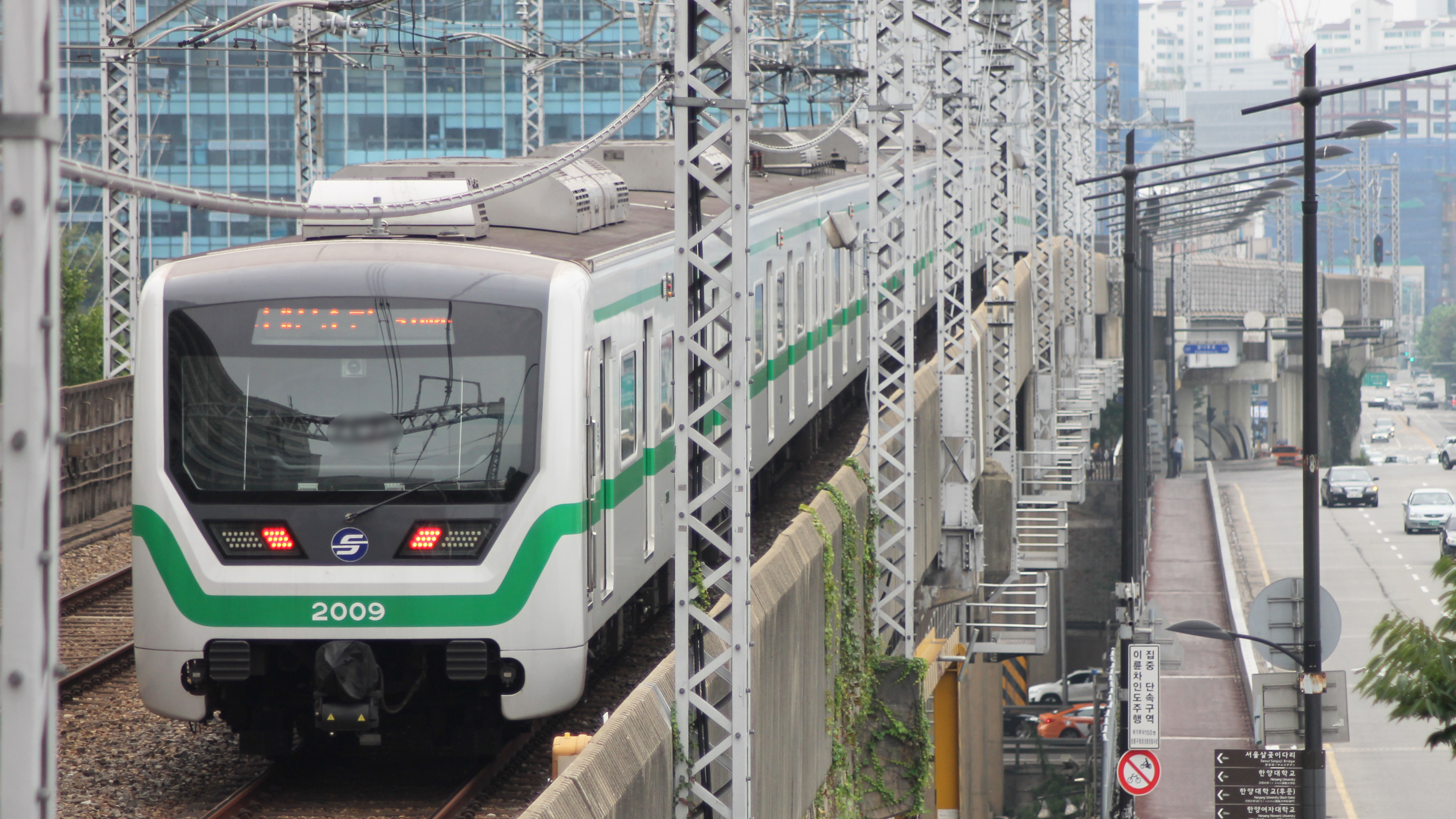
Small confession: on my third day in Korea, I confidently boarded the subway at Konkuk University Station... going the wrong direction. For five stops. While nodding along to the announcements like I understood them. 🙃
Fast forward a few months, and the Seoul subway is genuinely one of my favorite things about living here — it's clean, cheap, safe at night, has Wi-Fi, and goes basically everywhere. But the first week? Confusing. So here's everything I wish someone had told me on day one: which card to get, which apps actually work, the tap-out rule that WILL bite you, and the unwritten etiquette. 👇
Why the Seoul Subway Is Actually Amazing 🌟
Quick context for fellow newcomers: Seoul's metro is one of the biggest, densest subway systems in the world — 20+ color-coded lines and 700+ stations covering the entire capital region. Every station and train has Korean AND English signage, announcements come in multiple languages, trains are air-conditioned, and there's free Wi-Fi. Once it clicks, you'll never want to take a taxi again.
And it's cheap: a basic ride is around ₩1,550 with a transit card — a fraction of what public transit costs in most Western capitals. (Fares creep up every year or two, so treat that as "about ₩1,500-something.") 🫰
📍 Seoul Subway Survival Kit — Quick Info
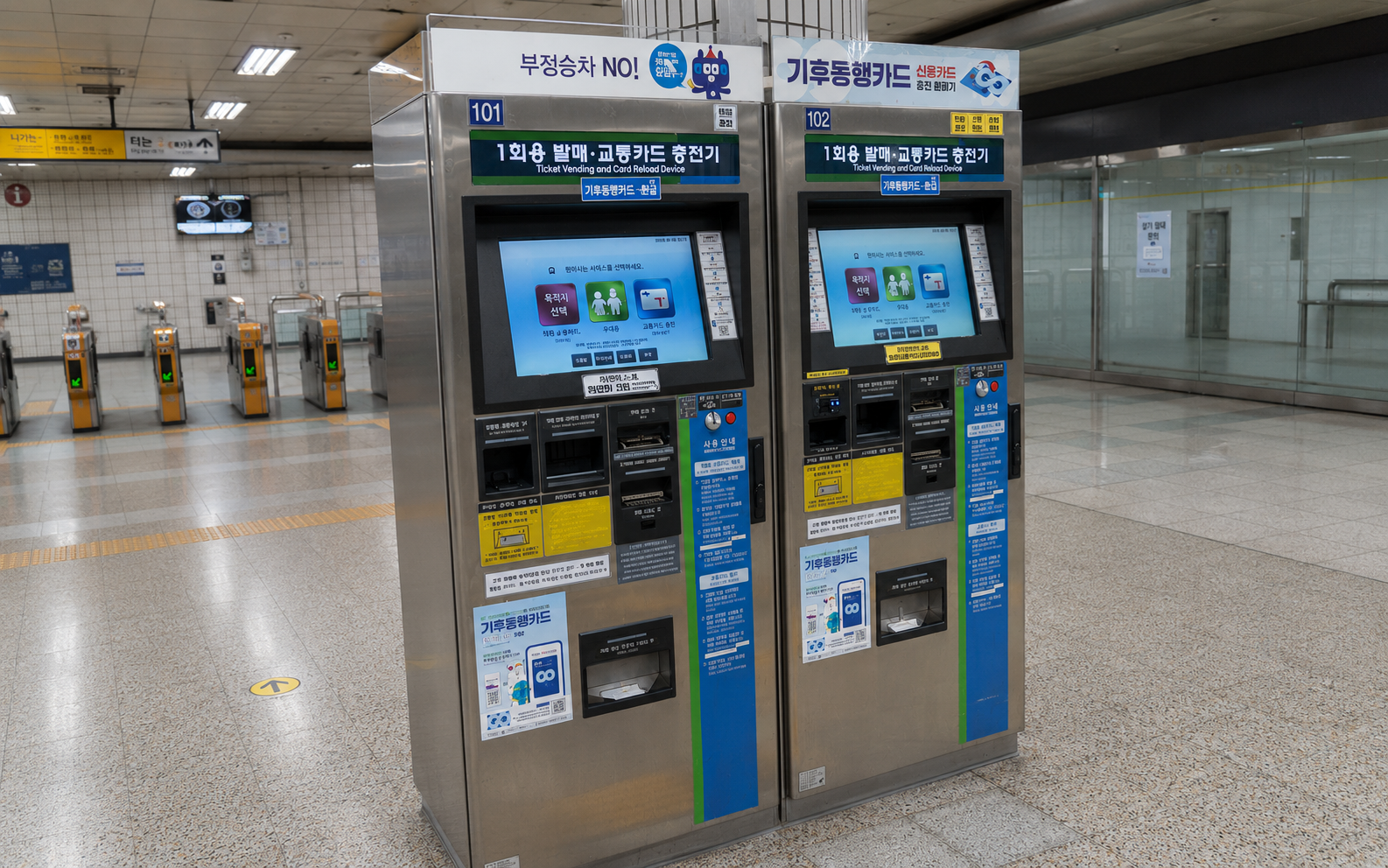
- Your card: T-money (티머니) — buy at any convenience store (~₩3,000–4,000 for the card), charge with cash or card
- Heavy user? Look into the Climate Card (기후동행카드) — unlimited monthly pass with a youth discount (age 19–39)
- The apps: Naver Map (네이버지도) or Kakao Map — NOT Google Maps (more below)
- Konkuk's stations: Konkuk University Station (건대입구역) sits on Line 2 (green) and Line 7 (olive) — an unfairly good starting position
- Hours: roughly 5:30 AM to midnight (varies by line) — the subway does NOT run all night
- Golden rule: tap in AND tap out. Every. Single. Time.
Step 1: Get a T-money Card (Your New Best Friend) 💳
Walk into literally any convenience store — GS25, CU, 7-Eleven — and say "T-money card juseyo." That's it. That's the whole process. The card costs a few thousand won, then you charge (충전) it with cash at the counter or at the machines inside any station.
Why T-money is the default answer:
- 🚇 Works on the subway, all buses, and taxis — one card for everything
- 🏪 Even works as payment at convenience stores
- 🇰🇷 Works nationwide — same card in Busan, Daegu, Jeju buses when you travel
- 🔄 Free-ish transfers: tap between subway and bus within the transfer window and you barely pay extra — the system treats it as one journey
📱 Bonus for the phone-native: you can also use Mobile T-money or apps like Toss to skip the plastic entirely — though the physical card is the zero-setup, works-on-day-one option.
If you ride a LOT (daily commute + weekend adventures), do the math on the Climate Card (기후동행카드) — Seoul's unlimited pass covering subway, city buses, and even Ttareungi bikes, with a cheaper youth version for ages 19–39 (around ₩55,000–58,000/month). Rule of thumb: if you take 40+ rides a month, unlimited wins. The pass system has been evolving lately, so double-check the current version on the Seoul city site before committing.
Step 2: Download the Right App (Hint: Not Google Maps) 📱
Here's the thing nobody warns you about: Google Maps barely works in Korea. Because of mapping regulations, it can't do proper walking or driving directions here. Watching a fellow foreigner rage at Google Maps outside a subway exit is how you spot the week-one arrivals. (It was me. I was week-one arrivals.)
What to use instead:
- 🟢 Naver Map (네이버지도) — the local standard, has an English interface, and its subway directions are scarily precise: it tells you the platform, the transfer walking time, even which car to board for the fastest transfer or exit
- 🟡 Kakao Map — equally great, pick whichever UI you vibe with
- 🚇 A dedicated subway map app (Kakao Metro / Subway Korea) is nice for offline "where am I" panic moments
Pro tips that upgrade you from tourist to local:
- The last train (막차) is earlier than you think — around midnight, and missing it means an expensive taxi. Naver Map shows last-train times; respect them.
- Station exits are numbered (Exit 1, 2, 3...) and they MATTER — coming out of the wrong exit at a big station can put you a 10-minute walk from where you wanted to be. Always check which exit number your destination wants.
- Transfers at mega-stations (looking at you, 잠실 and 고속터미널) involve real walking. The app's transfer-time estimate is not a suggestion, it's a warning. 😅
Step 3: Tap Out. Always. (The Rule That WILL Get You) ⚠️
Repeat after me: tap in when you enter, tap out when you leave. Every time. Subway AND bus.
The fare system charges by distance, so the tap-out is how it knows what to charge — and it's also how the transfer discount works. Forget to tap out of a bus and you lose your transfer discount and can get charged the maximum-distance fare; miss it repeatedly and your card can even get temporarily blocked. It's the single most expensive habit to NOT build.
While we're on rules-nobody-writes-down, the etiquette crash course:
- 🧓 Don't sit in the priority seats (노약자석) at the ends of each car — even if the train is packed and they're empty. They're for elderly, disabled, and pregnant passengers, and locals genuinely leave them open.
- 🩷 The pink seats are for pregnant passengers — same deal.
- 🤫 Keep it quiet — no speakerphone calls, headphones at civilized volume. The Seoul subway is remarkably hushed and it's kind of wonderful.
- 🚪 Let people off first. Stand to the sides of the doors. This one is sacred.
- 🧍 On escalators, stand right, walk left (officially you're not supposed to walk at all, but the right-side standing is universal).
What Riding the Seoul Subway Is Actually Like (Honest Review) 💬
What I loved:
- 💸 Absurd value — ~₩1,550 to cross a megacity, with transfer discounts on top
- 🌏 Genuinely foreigner-friendly — English everywhere, numbered exits, color-coded lines; you can be functionally illiterate in Korean (hi) and still navigate fine
- 🌙 Safe — late-night rides feel completely normal here, which as an exchange student is worth everything
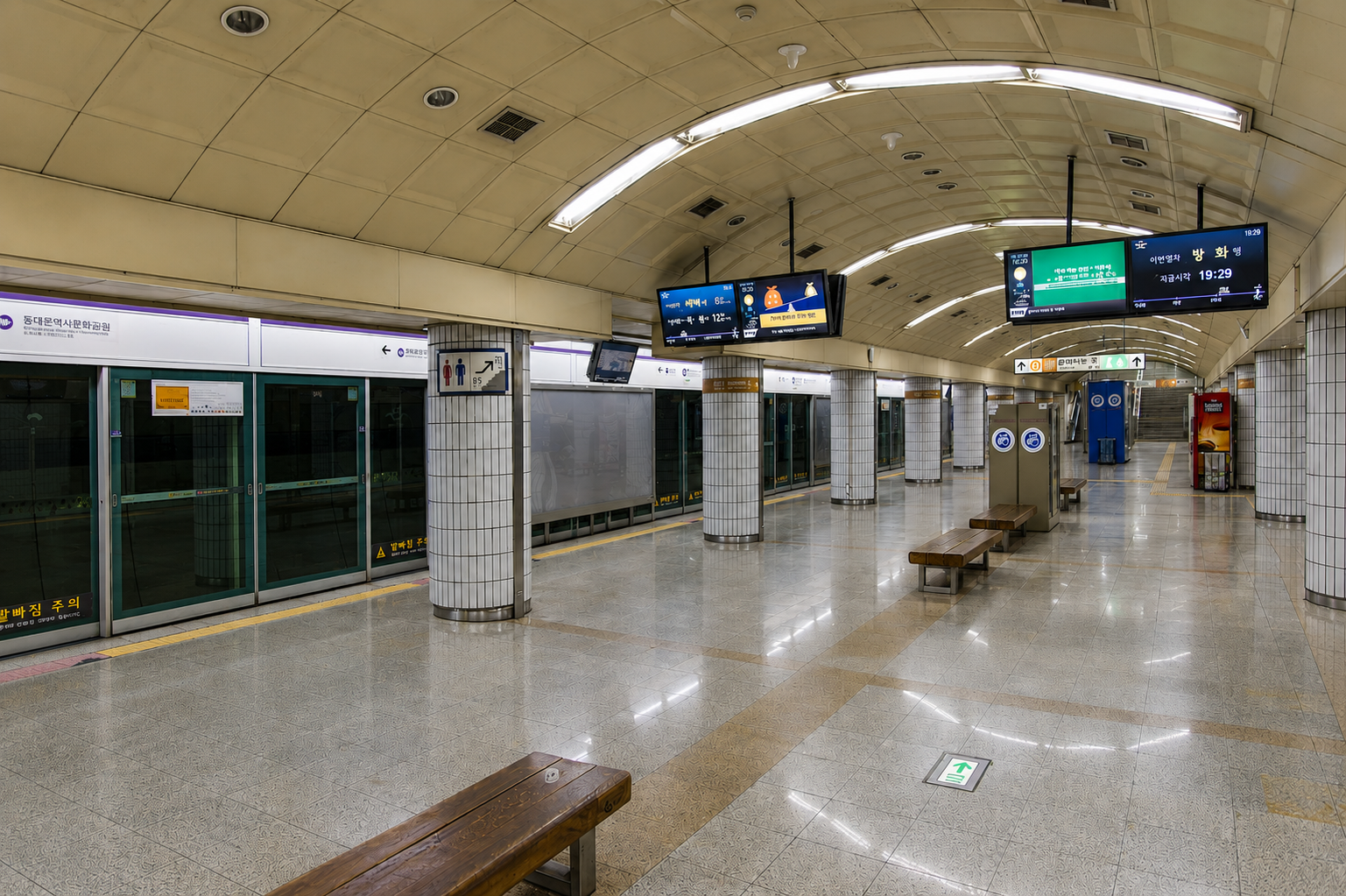
- 📶 Free Wi-Fi, heated seats in winter, and screens telling you exactly where you are
- 🧭 Once you learn Line 2 (the green circle line), you basically understand Seoul's geography
Be ready for:
- 😵 Rush hour (8–9 AM, 6–7 PM) is a full-contact sport — Line 2 and Line 9 express at peak time will introduce you to strangers very intimately. Avoid if you can.
- 🌙 No all-night service — plan your night around the last train or budget for a taxi
- 🏃 Transfer marathons at big interchange stations — those "5 min transfer" estimates assume brisk walking
- 🪜 Some older stations are stair-heavy — with big luggage, check for elevator exits (the apps mark them)
Seoul Subway — Quick Questions
The base fare is around ₩1,550 with a transit card (T-money), increasing slightly with distance. Transfers between subway and bus within the time window are discounted as one journey.
Naver Map or Kakao Map — both have English interfaces and precise subway directions, including transfer times and exit numbers. Google Maps doesn't fully work in Korea, so don't rely on it.
No — just buy a T-money card at any convenience store with cash, charge it, and tap in/out. No ID, registration, or Korean phone number needed. Heavy riders aged 19–39 can also look into the discounted youth Climate Card for unlimited monthly travel.
Final Take: The Subway Is Your Superpower 🚇✨
Here's what nobody tells you: learning the subway isn't just transportation, it's the moment Seoul stops being intimidating. Every place in this city — the Han River, the palaces, Seongsu popups, a 2 AM... okay, an 11:45 PM tteokbokki run — is suddenly yours, for pocket change, no Korean required.
I started as the person riding five stops the wrong way. Now I give directions to confused tourists. That arc is available to you too — it just starts with "T-money card juseyo." 🫡
I only learned the subway this fast because I had somewhere to learn it from. When I first landed in Korea, my whole brain was just "where do I live, and how do I not go broke doing it," squinting at Korean listings I couldn't read. CheckmateKorea (체크메이트코리아), a housing service made specifically for international students, is who finally got me sorted — a place near campus, near a station, near everything. Less "here's a room," more "here's your city, go learn its lines." 🥹
So if you're stuck in the housing-panic phase right now, it's worth browsing the listings near your campus through Checkmate Korea. Best case, you end up two minutes from a subway entrance — and trust me, in Seoul, that changes everything.