
Coin Noraebang: The ₩1,000 Therapy Session — A Foreigner's First Time
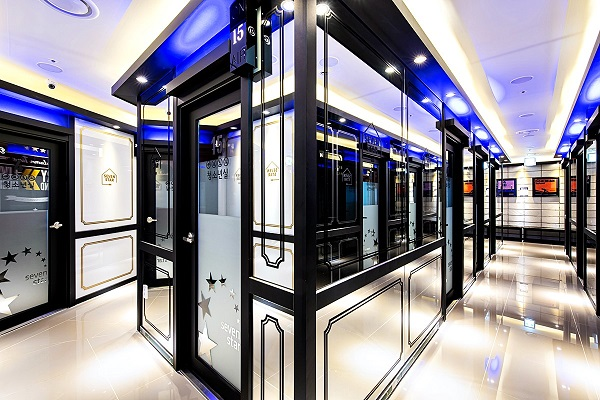
Here's a sentence I never expected to write: one of the most freeing moments of my exchange life happened alone, in a glass booth the size of a closet, screaming a song from 2010 to absolutely no one.
Walking around the Konkuk University area at night, I kept seeing them — neon-lit places full of tiny booths, people inside singing by themselves, completely unbothered. My brain, raised on "karaoke is a group activity you do slightly drunk and deeply embarrassed," could not process it. A Korean friend finally dragged me into one, handed me a coin, and said "pick a song."
Twenty minutes later I understood Korea a little better. This is my honest, foreigner-friendly guide to your first coin noraebang (코인노래방).
What Is a Coin Noraebang?
Quick context for fellow newcomers: a noraebang (노래방) is a Korean karaoke room — private rooms you rent by the hour with friends. A coin noraebang (코인노래방) is its budget, bite-sized cousin: tiny booths (usually built for 1–2 people) where you pay per song instead of per hour. Feed the machine, sing, leave whenever. No time pressure, no reservation, no minimum.
And here's the cultural plot twist that breaks every foreigner's brain: going alone is completely normal. It even has a name — honcono (혼코노), "singing at a coin noraebang by yourself." Students duck in between classes to sing two songs and leave. People rehearse. People de-stress. Nobody looks twice. The booth is soundproof-ish, the hallway minds its business, and the shame you brought from your home country simply does not apply here.
They're everywhere in university areas — the streets around Konkuk University Station (건대입구역) are dotted with them, usually open late into the night.
📍 Coin Noraebang — Quick Info
- Price: around ₩500 per song on average — many places do deals like 2–3 songs per ₩1,000, and some booths run on time instead (e.g., 30-minute blocks). Prices vary by shop; it's posted on the machine.
- Payment: despite the name, most machines now take cards and Samsung/mobile pay, not just coins — some shops have bill-changers if you're cash-only
- Where: all over the Konkuk area and every university neighborhood; look for 코인노래방 / 코노 signs, often on 2nd floors or basements
- Hours: typically late — many run past midnight, some 24 hours
- Solo-friendly: extremely. 혼코노 is a national institution.
- English songs: yes! The machines carry a big international library (more below)
Step 1: Getting In & Paying (Easier Than Ordering Coffee)
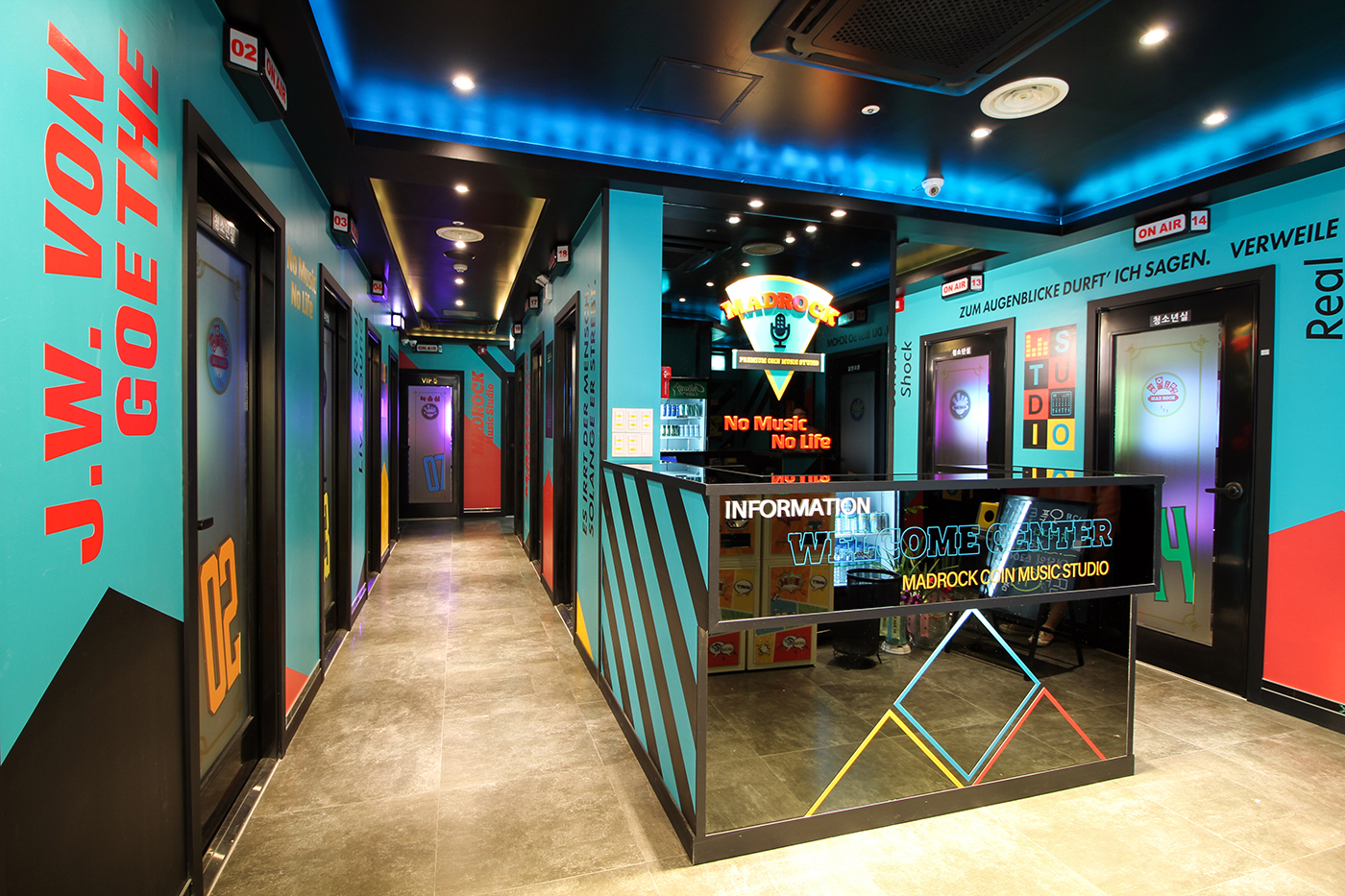
There's usually no counter and no staff interaction at all — coin noraebangs are mostly self-service, which for a nervous foreigner is honestly the dream. You walk in, pick any open booth, close the door, and you're home.
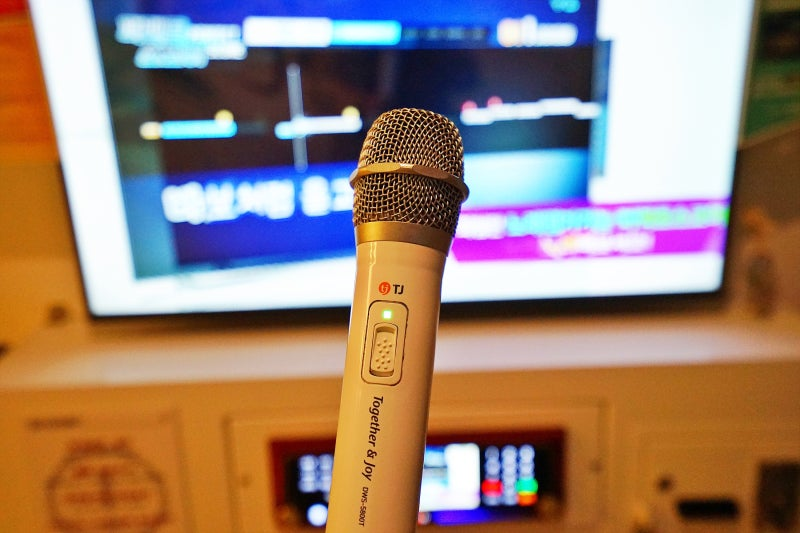
Inside: two mics, a screen, a control panel (or a big touchscreen), and a slot/reader for payment. Tap your card or feed in cash, and the screen shows your song credit. That's the whole onboarding. No Korean conversation required, no one judging your song choices — the machine keeps your secrets.
One legal fun fact that explains the vibe: coin noraebangs can't sell alcohol — they're classified differently from adult "luxury" karaoke venues. That's why they're bright, clean, student-filled spaces rather than boozy night spots, and why they feel totally safe to walk into alone at 11 PM.
Step 2: Finding Songs (Yes, In English) 🎶
The machine in ~90% of coin noraebangs is a TJ Media system, and here's the good news: it has a massive international songbook — English-language pop from every decade, plus Japanese, Chinese, and more. You will find your embarrassing songs. All of them.
How to search without reading Korean:
- 🔤 On the touchscreen/remote, look for the language or country tab — there's an English-song section, and you can search by artist or title in the Roman alphabet
- 🔢 Old-school method: booths have songbooks or QR codes listing songs with 5-6 digit numbers — type the number, press the start button (곡 시작), done
- 🎛️ The three buttons you'll actually use: key change (키) if the song is too high/low, tempo, and the glorious cancel/skip (취소) for when you've made a terrible mistake 30 seconds in
- 🇰🇷 Pro move: queue one K-pop song per session. Butchering the Korean lyrics in a soundproof booth is the single most low-stakes language practice available in this country. This is how I learned to read hangul faster, no joke.
And then there's the score screen. After every song, the machine grades you out of 100 with zero mercy and full drama. You will chase that 100. You will develop opinions about the scoring algorithm. This is the way. 😤
Step 3: Embracing Honcono (The Real Culture Lesson) 🧘
Here's what my first solo visit actually taught me, beyond the buttons.
Exchange life is a lot of performing — performing okay-ness in a new language, performing confidence in classrooms, performing "I'm having the best time!" for the folks back home. The coin noraebang is the one room in Korea where nobody needs anything from you. ₩1,000, two songs, scream the stress out, walk out lighter. Korean students have known this forever; now you do too.
It's also a sneaky-perfect friend activity for the early awkward stage: cheap enough that nobody stresses about cost, short enough that there's no commitment, and belting a bad duet demolishes social walls faster than any icebreaker. Some of my closest friendships here went through a "3 AM coin noraebang after tteokbokki" phase. Highly recommend the full course.
What It's Actually Like (Honest Review) 💬
What I loved:
- 💸 The cheapest fun in Korea — ₩1,000–3,000 covers a whole session; it's genuinely hard to spend more than a coffee's worth
- 🧘 Zero social pressure — solo singing is normalized, booths are private, and no staff interaction is needed
- 🌍 Huge English song library — you don't need a word of Korean to have a full session
- 🕐 No time commitment — two songs between classes is a completely valid visit
- 🗣️ Lowkey the best Korean pronunciation practice money can buy
Be ready for:
- 🔊 "Soundproof" is a strong word — you'll faintly hear your booth neighbors and they'll faintly hear you; the social contract is mutual selective deafness 😄
- 🎤 Hygiene varies — most places provide mic covers or sanitizer; use them
- 🌙 Peak hours get full — Friday/Saturday nights near campus can mean waiting for a booth; weekday afternoons are empty
- 💰 Pricing differs by shop — check the posted rate before feeding the machine; the deals (songs per ₩1,000) vary block to block
Is Coin Noraebang Worth It for International Students? ✅
It's not just worth it — it might be the single most Korean cheap thrill you can experience, and the fastest way to understand something real about life here: this country has industrialized the art of blowing off steam, and priced it for students.
Go with friends the first time if you're nervous. But at some point, on some stressful Tuesday, walk in alone, spend ₩1,000, and sing something ridiculous to an audience of zero. That's the real initiation. Welcome to honcono. 🎤✨
Confession: none of this — the booths, the 3 AM duets, the 혼코노 therapy sessions — was on my radar when I first landed in Korea. Back then my whole brain was just "where do I live, and how do I not go broke doing it," squinting at Korean listings I couldn't read. CheckmateKorea (체크메이트코리아), a housing service made specifically for international students, is who finally got me sorted — and then kept nudging me toward the good stuff around campus. Less "here's a room," more "here's your neighborhood, go make some noise in it." 🥹
So if you're stuck in the housing-panic phase right now, it's worth browsing the listings near your campus through Checkmate Korea. Best case, you end up a five-minute walk from the glass booth where you'll sing your homesickness away for ₩500 a song.